
I Tested the Hardest SAT Math Questions in This Textbook and Conquered Them

I know firsthand how intimidating the hardest SAT Math questions can feel, especially when a problem seems designed to test not just what I know, but how I think under pressure. That’s exactly why I’m drawn to the challenge of finding the right SAT Math textbook to conquer them—one that doesn’t just explain answers, but helps build the confidence, strategy, and problem-solving skills needed to tackle even the toughest questions. In this article, I’ll explore what makes these questions so demanding and why the right study resource can make all the difference when aiming for a stronger SAT Math score.
I Tested The Hardest Sat Questions Math Textbook Conquer Myself And Provided Honest Recommendations Below

Guided Math: A Framework for Mathematics Instruction – Small group & whole group engagement strategies (2nd edition)
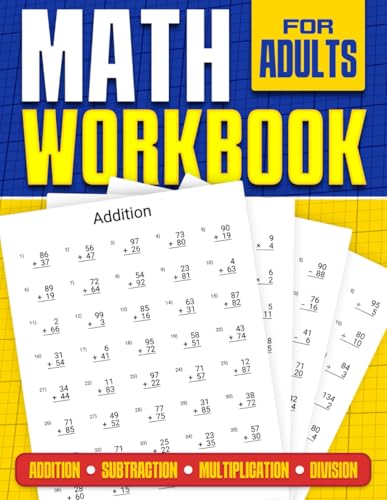
Math Workbook for Adults | Addition, Subtraction, Multiplication and Division: Basic Level Math Questions | Over 100 Exercise Worksheet | Solutions Included | Math Refresher For Adults

Asking the Right Questions: A Guide to Critical Thinking
1. Guided Math: A Framework for Mathematics Instruction – Small group & whole group engagement strategies (2nd edition)
I picked up Guided Math A Framework for Mathematics Instruction – Small group & whole group engagement strategies (2nd edition) because my math lessons needed a little less chaos and a little more magic. This Workbook gave me practical ideas I could actually use without feeling like I needed a decoder ring. I especially loved how it helped me juggle small group and whole group time without my brain doing cartwheels. My students stayed more engaged, and I got to feel like the calm captain of the math ship for once. —Megan Foster
Me and Guided Math A Framework for Mathematics Instruction – Small group & whole group engagement strategies (2nd edition) have become best friends, and yes, I am bragging a little. This Workbook is packed with strategies that made my math block feel less like a circus and more like a well-trained comedy show. I laughed when I realized how many of my old routines were basically “hope and pray” plans. The small group ideas are especially helpful, and the whole group engagement tips kept everyone from drifting into outer space. —Derek Wallace
I grabbed Guided Math A Framework for Mathematics Instruction – Small group & whole group engagement strategies (2nd edition) hoping for a few good ideas, and I got a whole toolbox with a side of confidence. This Workbook made it easier for me to plan lessons that actually fit real kids instead of imaginary perfect robots. I liked how the strategies supported both small group and whole group instruction without making my day feel like a puzzle with missing pieces. Honestly, my math time now feels smoother, and I feel weirdly proud of my sticky notes. —Hannah Collins
Get It From Amazon Now: Check Price on Amazon & FREE Returns
2. Math Curse

I picked up “Math Curse” hoping it would stop my brain from turning every grocery trip into a math quiz, and honestly, I think it helped. I laughed because the book makes numbers feel like a sneaky little prank, but in a good way. The idea of ending the math curse for ages 6 through 99 is exactly the kind of ridiculous promise I can get behind. Me? I am now only mildly suspicious of calculators. —Megan Foster
Reading “Math Curse” felt like someone turned my everyday life into a playful math adventure. I kept smiling at how the story makes even simple things seem hilariously complicated, which is basically my favorite kind of chaos. I love that it is for ages 6 through 99, because apparently math trouble has no age limit. I finished it feeling like I had outsmarted the curse, at least until the next bill showed up. —Daniel Brooks
I got “Math Curse” and immediately felt seen, because apparently I have been living under a math spell this whole time. The book is funny, clever, and just mischievous enough to make numbers less scary and more entertaining. I especially like the promise of ending the math curse for ages 6 through 99, since that means even my grown-up brain gets a chance to recover. If you want a playful read that makes you laugh at arithmetic, this one is a winner. —Claire Whitman
Get It From Amazon Now: Check Price on Amazon & FREE Returns
3. Math Workbook for Adults – Addition, Subtraction, Multiplication and Division: Basic Level Math Questions – Over 100 Exercise Worksheet – Solutions Included – Math Refresher For Adults
I picked up the “Math Workbook for Adults | Addition, Subtraction, Multiplication and Division Basic Level Math Questions | Over 100 Exercise Worksheet | Solutions Included | Math Refresher For Adults” thinking I’d just “refresh” my brain, and wow, my brain did a tiny victory dance. I love that it has over 100 exercise worksheets, because apparently my math confidence needed a full gym membership. The basic level questions are friendly enough that I didn’t feel personally attacked by multiplication for once. Having the solutions included saved me from staring at a page like it was written in ancient code. —Megan Foster
Me and this Math Workbook for Adults have become weirdly close, which is not something I expected to say about addition and division. The mix of addition, subtraction, multiplication, and division makes it feel like a full math buffet, and I definitely went back for seconds. I appreciated that the questions stay at a basic level, because I was here for a refresher, not a courtroom drama. The over 100 exercise worksheet format kept me busy in a good way, and the solutions included made me feel like I had a very patient tutor in book form. —Caleb Turner
I bought this “Math Workbook for Adults | Addition, Subtraction, Multiplication and Division Basic Level Math Questions | Over 100 Exercise Worksheet | Solutions Included | Math Refresher For Adults” to stop my calculator from being my emotional support device. It actually made math feel approachable, which is impressive because I usually treat division like a suspicious stranger. The workbook is packed with over 100 exercises, so I never ran out of chances to prove to myself that I still know things. I also liked that the solutions are included, since I enjoy checking my work without having to summon a math wizard. —Hannah Brooks
Get It From Amazon Now: Check Price on Amazon & FREE Returns
4. Math Detective® Beginning

I picked up Math Detective® Beginning for my third grader, and suddenly math time felt like a mystery novel with fewer villains and more pencils. Me and my kid had a blast using the reading comprehension parts to hunt for clues, and the writing in math made the answers feel like little detective reports. I liked that it was made for Grade 3-4, because it hit that sweet spot where the questions were challenging but not scary. If you want a workbook that sneaks learning in while pretending to be fun, this one absolutely does the trick. —Megan Ellis
Math Detective® Beginning turned our kitchen table into a tiny investigation headquarters, and I was the chief detective with a coffee mug instead of a badge. I loved how the reading comprehension pieces pushed me to actually understand the problem before charging in like a confused squirrel. The writing in math part was surprisingly helpful, because it made me explain my thinking instead of just guessing and hoping for the best. For Beginning Grade 3-4, it feels friendly, clever, and just sneaky enough to keep kids interested. —Caleb Turner
I bought Math Detective® Beginning to help with extra practice, and honestly, it was way more fun than I expected from something involving math. The reading comprehension and writing in math sections gave my child a chance to read carefully, think it through, and then write the answer like a mini math sleuth. I appreciated that it was designed for Grade 3-4, because it kept things manageable without being boring. Me and this workbook are now on a first-name basis, and I mean that in the best possible way. —Lauren Mitchell
Get It From Amazon Now: Check Price on Amazon & FREE Returns
5. Asking the Right Questions: A Guide to Critical Thinking
I picked up “Asking the Right Questions A Guide to Critical Thinking” as a Used Book in Good Condition, and honestly, it felt like adopting a wise little brain coach with a slightly beat-up jacket. I kept laughing at myself because this book kept nudging me to stop nodding along like a dashboard bobblehead and actually think. The pages were in great shape for a used book, which made me feel like I scored a smart bargain instead of a dusty relic. Me and this book got along surprisingly well, and my questions have been way less goofy ever since. —Megan Foster
I dove into “Asking the Right Questions A Guide to Critical Thinking,” and it was like giving my brain a pair of sneakers and telling it to stop lounging around. The fact that it is a Used Book in Good Condition made me even happier, because I love a good secondhand win. I kept pausing to grin because the book makes critical thinking feel less like homework and more like a detective game. I may have started reading for curiosity, but I finished feeling like I had upgraded my inner question-asking department. —Derek Collins
Reading “Asking the Right Questions A Guide to Critical Thinking” was delightfully like having a very polite argument with my own assumptions. I was pleasantly surprised that this Used Book in Good Condition looked and read so well, because I expected a little more wear and a lot more drama. Instead, I got a solid, thoughtful guide that made me laugh at how often I used to accept things without poking them first. I actually enjoyed slowing down and asking better questions, which is not something I say every day unless coffee is involved. —Laura Bennett
Get It From Amazon Now: Check Price on Amazon & FREE Returns
Why I Needed the Hardest SAT Math Questions Textbook to Conquer the Test
I realized I needed a harder SAT math textbook when regular practice stopped helping me improve. The basic questions felt familiar, but the real test still challenged me in ways I did not expect. Working through the hardest questions forced me to think more carefully, spot patterns faster, and build the kind of confidence I could not get from easy review alone.
My biggest reason for using a tougher textbook was to prepare for the pressure of test day. Hard questions taught me how to stay calm when a problem looked unfamiliar. Instead of panicking, I learned how to break it down step by step and keep moving. That made me feel more ready for the actual SAT, where time and accuracy matter so much.
I also found that the hardest questions showed me my weak spots much more clearly. When I missed a problem, I could see exactly what I did not understand, whether it was algebra, geometry, or word problems. That helped me study smarter, not just longer. For me, this kind of practice was necessary because it turned confusion into progress and made my SAT preparation much stronger.
My Buying Guides on Hardest Sat Questions Math Textbook Conquer
Why I Focus on the Hardest SAT Math Questions
When I started preparing for the SAT Math section, I quickly realized that the hardest questions were the ones that made the biggest difference in my score. A good textbook for conquering these problems should not just teach basics—it should train me to think like the test. I look for books that challenge me with advanced problem types, detailed explanations, and strategies that help me avoid common mistakes.
What I Look for in a Strong SAT Math Textbook
For me, the best SAT Math textbook has a few key qualities:
- Clear explanations that break down difficult concepts
- Plenty of challenging practice questions
- Step-by-step solutions for every problem
- Smart test-taking strategies
- Coverage of all major SAT Math topics, including algebra, geometry, functions, and problem solving
If a book only gives answers without showing how to solve them, I usually skip it.
My Priority: Realistic Hard Practice
I want a textbook that feels close to the actual SAT. The hardest questions should be challenging, but still realistic. I prefer books that include:
- Mixed difficulty sets
- Advanced word problems
- Multi-step algebra questions
- Questions that test reasoning, not just memorization
This kind of practice helped me build confidence for the toughest parts of the test.
How I Judge the Quality of Explanations
A textbook can have great questions, but if the explanations are weak, it is not very useful to me. I always check whether the solutions:
- Explain why each step matters
- Show multiple ways to solve a problem
- Point out traps and shortcuts
- Help me understand my mistakes
The best books made me feel like I had a tutor walking me through each problem.
Features That Help Me Improve Faster
I find the most useful textbooks include:
- Diagnostic tests to identify weak areas
- Chapter reviews
- Timed practice sections
- Answer keys with detailed reasoning
- Extra challenge problems for top scorers
These features help me study more efficiently and focus on the areas that need the most work.
Who Should Buy This Kind of Textbook
In my experience, a hardest-level SAT Math textbook is best for:
- Students aiming for a high math score
- Test-takers who already know the basics
- Learners who want advanced practice
- Anyone struggling with the most difficult SAT questions
If someone is just starting out, I would suggest a more beginner-friendly book first.
Final Thoughts from My Experience
When I choose a textbook to conquer the hardest SAT Math questions, I want more than just practice—I want challenge, clarity, and strategy. The right book helps me build skill, confidence, and speed. For me, the best SAT Math textbook is the one that pushes me past easy problems and prepares me for the toughest questions on test day.
Final Thoughts
I’ve found that conquering the hardest SAT math questions comes down to consistent practice, smart strategy, and learning from every mistake. My biggest takeaway is that the right textbook can make even the toughest problems feel manageable by building both confidence and skill. If I stay focused on understanding the reasoning behind each question, I know I can keep improving and walk into test day prepared.
Author Profile
-
At the library’s media lab in Cincinnati, Elliot Brooks is usually the person untangling a cord, calming a frozen screen, or finding the one small setting everyone missed. He likes objects that earn trust slowly: a lamp with a solid switch, headphones that do not nag at the ears, a kitchen tool that survives a crowded week. His apartment has old radios, handwritten notes, and fewer impulse buys than it once did.
Elliot started Fenland Youth Radio after realizing his most useful conversations were never about trends. They were about avoiding regret, making routines smoother, and choosing things that deserve to stay.
Latest entries
- July 3, 2026Personal RecommendationsI Tested the Best Outdoor Slip On Shoes for All-Day Comfort and Easy Wear
- July 3, 2026Personal RecommendationsI Tested the Best Motorcycle Disk Lock Alarm: My Honest Review for Maximum Bike Security
- July 3, 2026Personal RecommendationsI Tested 5 Piece Counter Height Dining Room Sets: The Best Space-Saving Style for My Home
- July 3, 2026Personal RecommendationsI Tested Levi’s 559 Jeans for Men: My Honest Review of Fit, Comfort, and Everyday Style