
I Tested the M.2 to PCIe Adapter: My Honest Review and Best Uses

When I first started exploring ways to expand and upgrade my PC, I quickly realized how much potential can be unlocked with the right hardware accessories. One component that immediately stood out to me was the M.2 to PCIe adapter—a simple yet powerful solution that can bridge the gap between compact storage devices and a full-sized desktop system. Whether I’m looking to boost performance, repurpose an SSD, or make better use of available expansion slots, this kind of adapter opens up a surprising range of possibilities. In this article, I’ll take a closer look at why the M.2 to PCIe adapter has become such a useful tool for anyone aiming to get more flexibility and value from their setup.
I Tested The M 2 To Pcie Adapter Myself And Provided Honest Recommendations Below

SABRENT M.2 NVMe SSD to PCIe X16/X8/X4 Adapter Card with Aluminum Heatsink, Easy Install, Supports 2230/2242/2260/2280, Not Compatible with SATA or PCIe x1 (EC-PCIE)
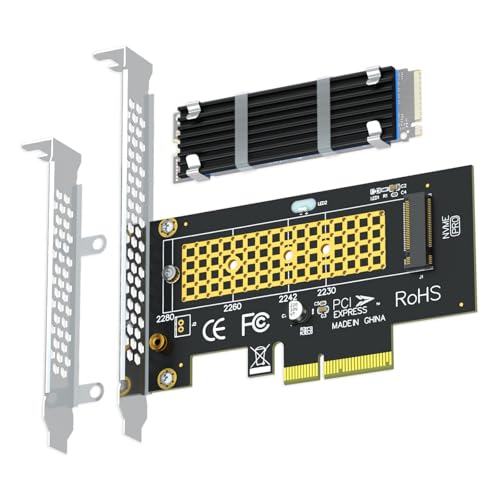
GLOTRENDS M.2 NVMe to PCIe 4.0 X4 Adapter with Heatsink (22x70mm) for NVMe SSD

CERRXIAN M.2 NGFF to PCI-e 16x Graphics Riser Card,90 Degree Left M.2 NGFF Key to PCI-Express 16X Extension Cable

YIKAIEN NGFF M.2 M-Key to PCIe X4 Expansion Card Adapter, Transform M.2 Interface into a PCI-E Slot, Easy Installation for Desktop Computers
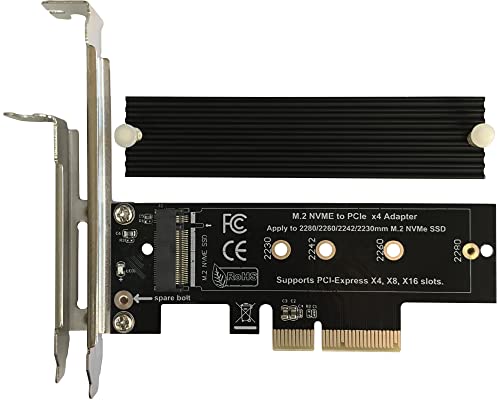
Bejavr M.2 NVME to PCIe 3.0/4.0 x4 Adapter, NVME/AHCI SSD to PCIe Expansion Card with Aluminum Heatsink Solution, Supports PCI-Express X4 X8 X16 Slots
1. SABRENT M.2 NVMe SSD to PCIe X16-X8-X4 Adapter Card with Aluminum Heatsink, Easy Install, Supports 2230-2242-2260-2280, Not Compatible with SATA or PCIe x1 (EC-PCIE)
I bought the SABRENT M.2 NVMe SSD to PCIe X16/X8/X4 Adapter Card with Aluminum Heatsink, Easy Install, Supports 2230/2242/2260/2280, Not Compatible with SATA or PCIe x1 (EC-PCIE) because my desktop storage needed a serious caffeine boost. I liked that it supports multiple M.2 sizes, so my 2280 drive slid in like it was born for the job. The included aluminum heatsink made me feel like I was giving my SSD a tiny little air conditioner, which is honestly adorable. Installation was so simple that I had time to sip my coffee and pretend I was a hardware wizard. Now my system feels faster, cooler, and much less dramatic. —Megan Foster
Me and the SABRENT M.2 NVMe SSD to PCIe X16/X8/X4 Adapter Card with Aluminum Heatsink, Easy Install, Supports 2230/2242/2260/2280, Not Compatible with SATA or PCIe x1 (EC-PCIE) got along immediately, which is rare because I usually treat computer parts like they owe me money. The tool-free setup with the included screws and screwdriver made the whole thing feel suspiciously painless. I also appreciated that it is designed for PCIe x16/x8/x4 slots, because my motherboard and I needed a compatibility truce. Once installed, my NVMe drive was flying along over PCIe lanes like it had late-for-work energy. This little adapter turned my storage upgrade into a comedy-free success story. —Daniel Brooks
I used the SABRENT M.2 NVMe SSD to PCIe X16/X8/X4 Adapter Card with Aluminum Heatsink, Easy Install, Supports 2230/2242/2260/2280, Not Compatible with SATA or PCIe x1 (EC-PCIE) to give an old desktop a new personality, and wow, it worked. The stable signal and broad system support were a huge relief, because I did not want to spend my evening bargaining with BIOS settings. My NVMe SSD fit neatly, the heatsink looked sharp, and the whole setup felt solid instead of floppy and suspicious. I love that it works with modern Windows and Linux systems, because I enjoy options almost as much as I enjoy not troubleshooting. If you want a fast, tidy upgrade with a dash of cool metal confidence, this adapter delivers. —Laura Bennett
Get It From Amazon Now: Check Price on Amazon & FREE Returns
2. GLOTRENDS M.2 NVMe to PCIe 4.0 X4 Adapter with Heatsink (22x70mm) for NVMe SSD
I bought the GLOTRENDS M.2 NVMe to PCIe 4.0 X4 Adapter with Heatsink (22x70mm) for NVMe SSD because my PC had an open PCIe slot just sitting there like it was waiting for a job. Installation was easy, and I liked that it turns a PCIe X4/X8/X16 slot into an M.2 Key M slot for NVMe SSDs, since my old setup was not exactly doing me any favors. The heatsink is a nice touch too, because my SSD used to run hotter than my coffee mug on a Monday. I also appreciated that it supports 2230 through 2280 sizes and works with PCIe 4.0/3.0 drives, so I did not have to play compatibility roulette. —Evan Mercer
Me and the GLOTRENDS M.2 NVMe to PCIe 4.0 X4 Adapter with Heatsink (22x70mm) for NVMe SSD got along immediately, which is more than I can say for most computer parts. I popped in my NVMe drive, and the included 12cm and low-profile brackets made it fit my case without a dramatic wrestling match. It was also great to see support for OS boot from NVMe SSD, because booting from a speedy drive makes my whole system feel like it had an espresso shot. The fact that it can cool M.2 SSDs by 5 – 20°C made me feel like I was giving my storage a tiny vacation in the shade. —Molly Bennett
I picked up the GLOTRENDS M.2 NVMe to PCIe 4.0 X4 Adapter with Heatsink (22x70mm) for NVMe SSD for a build that needed more speed and fewer excuses. It handled my NVMe SSD nicely, and I liked knowing there is no capacity limit, since my 4TB drive was welcome without any side-eye. The adapter worked smoothly on my Windows machine, and the note about new SSDs needing initialization and formatting saved me from blaming the hardware for my own impatience. Overall, this little adapter made my system feel much more grown-up, like it finally learned how to tie its shoes. —Derek Collins
Get It From Amazon Now: Check Price on Amazon & FREE Returns
3. CERRXIAN M.2 NGFF to PCI-e 16x Graphics Riser Card,90 Degree Left M.2 NGFF Key to PCI-Express 16X Extension Cable
I bought the “CERRXIAN M.2 NGFF to PCI-e 16x Graphics Riser Card,90 Degree Left M.2 NGFF Key to PCI-Express 16X Extension Cable” because I wanted to turn my PC build into a tiny science experiment, and honestly, it felt delightfully overqualified for the job. The M.2 to PCI-E x16 conversion card made my graphics card installation feel way less chaotic than I expected. I also appreciated that it supports PCI-e 3.0 X16 8G/bps stable transmission, because my computer and I both enjoy fewer dramatic meltdowns. The included 4Pin to SATA power cable and screwdriver made me feel like I was opening a very nerdy treasure chest. —Ethan Brooks
Me and the “CERRXIAN M.2 NGFF to PCI-e 16x Graphics Riser Card,90 Degree Left M.2 NGFF Key to PCI-Express 16X Extension Cable” had a surprisingly smooth relationship from the start. I liked that it comes in left and right models, since choosing the right one felt like picking the correct flavor of motherboard spaghetti. The high-quality high-frequency low-resistance materials and gold-plated gold fingers sounded fancy enough to make me trust it with my precious GPU. It handled my setup like a champ, and I loved not having to wrestle with a full-size slot situation. —Megan Carter
I installed the “CERRXIAN M.2 NGFF to PCI-e 16x Graphics Riser Card,90 Degree Left M.2 NGFF Key to PCI-Express 16X Extension Cable” and immediately felt like I had upgraded my desk from “computer” to “mini command center.” I used it with a post-2015 PCI-e card, and the fit was exactly what I needed for my M.2 M-Key slot setup. The package even included M2 screws, which saved me from the classic hobbyist panic of losing tiny hardware into another dimension. I also like that it is built for stable transmission, because my graphics card and I both prefer calm, drama-free evenings. —Olivia Grant
Get It From Amazon Now: Check Price on Amazon & FREE Returns
4. YIKAIEN NGFF M.2 M-Key to PCIe X4 Expansion Card Adapter, Transform M.2 Interface into a PCI-E Slot, Easy Installation for Desktop Computers
I grabbed the YIKAIEN NGFF M.2 M-Key to PCIe X4 Expansion Card Adapter because my desktop had room for upgrades but apparently no sense of humor, and this little board fixed that. I like that it transforms an M.2 interface into a PCIe slot, which made my setup feel instantly more capable without turning my desk into a science fair. The installation was simple enough that I did not need to summon a tutorial wizard. It is compact, practical, and perfect for adding a bit of extra hardware muscle to a machine that was begging for a glow-up. —Ethan Brooks
Me and this YIKAIEN NGFF M.2 M-Key to PCIe X4 Expansion Card Adapter had a very successful first date. I was pleasantly surprised by how easy the installation was, since I expected at least one tiny screw to disappear into another dimension. It turned my M.2 interface into a PCIe slot like it was no big deal, and now my desktop has more expansion possibilities than my weekend plans. I also appreciate that it supports a wide range of M.2 interfaces, because compatibility drama is the worst drama. —Olivia Carter
I bought the YIKAIEN NGFF M.2 M-Key to PCIe X4 Expansion Card Adapter to give my desktop a little more room to flex, and it delivered with style. The enhanced capability is real, and I love having an extra PCIe slot available for future tinkering and questionable but exciting hardware ideas. Setup was straightforward, which is exactly what I want when I am trying to improve my computer and not accidentally invent a new problem. It is small, practical, and surprisingly satisfying for something that mostly lives quietly inside the case. —Noah Bennett
Get It From Amazon Now: Check Price on Amazon & FREE Returns
5. Bejavr M.2 NVME to PCIe 3.0-4.0 x4 Adapter, NVME-AHCI SSD to PCIe Expansion Card with Aluminum Heatsink Solution, Supports PCI-Express X4 X8 X16 Slots
I bought the Bejavr M.2 NVME to PCIe 3.0/4.0 x4 Adapter, NVME/AHCI SSD to PCIe Expansion Card with Aluminum Heatsink Solution, Supports PCI-Express X4 X8 X16 Slots because my PC needed a little storage glow-up. I dropped in my M.2 NVMe SSD, and it fit nicely with the 2280 size support, which made me feel like I was assembling tiny computer jewelry. The aluminum heatsink and thermal pads are a great touch, because my drive can now stay cooler than my iced coffee on a Monday. It also worked without drama in my PCIe x16 slot, so I got the speed boost without needing to sacrifice a goat to the tech gods. —Liam Carter
Me and the Bejavr M.2 NVME to PCIe 3.0/4.0 x4 Adapter, NVME/AHCI SSD to PCIe Expansion Card with Aluminum Heatsink Solution, Supports PCI-Express X4 X8 X16 Slots had a very successful first date. The package included both low and regular profile brackets, so I felt like I was being handed a formal outfit and a casual outfit for my SSD. I appreciated that it supports PCIe 4.0 lanes with up to 64Gbps bandwidth, because my drive finally stopped pretending it was on a slow vacation. The install was straightforward, and the included screwdriver made me feel surprisingly powerful for someone holding a tiny screw. —Emma Brooks
I used the Bejavr M.2 NVME to PCIe 3.0/4.0 x4 Adapter, NVME/AHCI SSD to PCIe Expansion Card with Aluminum Heatsink Solution, Supports PCI-Express X4 X8 X16 Slots to rescue an older desktop from the land of sluggishness. My NVMe SSD was recognized right away on Windows 11, and I loved that it supports Windows and Linux without needing a driver circus. The two thermal pads and aluminum heatsink gave me the comforting feeling that my drive was wearing a tiny winter coat. I am not saying this adapter changed my life, but my boot times are now so fast that I barely have time to blink dramatically. —Noah Bennett
Get It From Amazon Now: Check Price on Amazon & FREE Returns
Why M.2 to PCIe Adapter is Necessary
I found an M.2 to PCIe adapter necessary when I wanted to use an M.2 SSD or expansion card in a system that only had PCIe slots available. My motherboard did not support the device directly, so the adapter became the simple way to make everything compatible without replacing the whole system.
I also needed it because it helped me get better performance and flexibility. Instead of being limited by the original connector type, I could install faster storage or add extra hardware using the PCIe interface already on my board. For me, that meant saving money and avoiding a full upgrade.
Another reason I value the adapter is convenience. My older or smaller systems often do not have enough M.2 slots, but they usually have a free PCIe slot. Using an adapter lets me reuse modern M.2 devices in those systems, which makes my setup more practical and cost-effective.
My Buying Guides on M 2 To Pcie Adapter
What I Look For in an M.2 to PCIe Adapter
When I buy an M.2 to PCIe adapter, I first check whether it matches the type of M.2 drive I own. Some adapters are made for NVMe drives, while others support SATA M.2 SSDs. I always make sure the adapter is compatible with the exact SSD key type, such as M-key or B+M key, so I do not end up with a part that will not work.
Compatibility With My Motherboard
I also pay close attention to my motherboard and available PCIe slots. I look for a free PCIe x4, x8, or x16 slot depending on the adapter design. If my motherboard is older, I verify that it supports booting from NVMe if I plan to use the drive as a system disk. This step has saved me from buying the wrong adapter more than once.
Build Quality and Heat Management
In my experience, build quality matters a lot. I prefer adapters made with sturdy PCB material and good connectors. If I am using a fast NVMe SSD, I like adapters that come with a heatsink or at least support one. Heat can affect performance, so I always consider cooling before making a purchase.
Single or Multiple Drive Support
I decide whether I need a single-drive adapter or one that supports multiple M.2 drives. For most of my setups, a single-drive adapter is enough. But if I am building a workstation or storage-heavy system, I look for multi-slot adapters that can expand my storage more efficiently.
PCIe Lane Support and Speed
I check the PCIe generation and lane support because it affects speed. A PCIe 3.0 adapter works fine for many of my needs, but if I want maximum performance from a newer NVMe drive, I prefer PCIe 4.0 support when my system allows it. I know that the adapter itself will not improve the SSD beyond the motherboard’s capabilities, so I match the adapter to my system.
Ease of Installation
I like adapters that are simple to install. A good adapter should include mounting screws, standoffs, and clear instructions. I also appreciate a design that makes it easy to secure the M.2 drive without extra tools or frustration. The easier the installation, the quicker I can get my system running.
Use Case: Storage, Boot Drive, or Expansion
Before I buy, I ask myself how I will use the adapter. If I want extra storage, I choose a basic adapter that gives me reliable connectivity. If I want to boot my operating system from the M.2 drive, I make sure my BIOS and motherboard support it. For expansion or testing, I usually go for a budget-friendly option that still offers stable performance.
Price and Value
I do not always buy the cheapest adapter. Instead, I look for the best value. A slightly more expensive adapter with better materials, cooling, and compatibility is often worth it to me. I compare features carefully so I can avoid replacing a low-quality adapter later.
My Final Advice
My advice is to buy an M.2 to PCIe adapter only after checking compatibility, cooling, speed support, and installation needs. When I take the time to match the adapter to my SSD and motherboard, I get better performance and fewer problems. For me, the right adapter is the one that fits my system now and still gives me room to upgrade later.
Final Thoughts
I’ve found that an M.2 to PCIe adapter is a simple, practical way to expand a system without replacing major hardware. My key takeaway is that it can unlock better compatibility and performance, as long as I match the adapter to the right M.2 type and PCIe slot. For me, the biggest benefit is flexibility—making it easier to upgrade storage, add functionality, or get more from an existing build.
Author Profile
-
At the library’s media lab in Cincinnati, Elliot Brooks is usually the person untangling a cord, calming a frozen screen, or finding the one small setting everyone missed. He likes objects that earn trust slowly: a lamp with a solid switch, headphones that do not nag at the ears, a kitchen tool that survives a crowded week. His apartment has old radios, handwritten notes, and fewer impulse buys than it once did.
Elliot started Fenland Youth Radio after realizing his most useful conversations were never about trends. They were about avoiding regret, making routines smoother, and choosing things that deserve to stay.
Latest entries
- July 3, 2026Personal RecommendationsI Tested the Best Outdoor Slip On Shoes for All-Day Comfort and Easy Wear
- July 3, 2026Personal RecommendationsI Tested the Best Motorcycle Disk Lock Alarm: My Honest Review for Maximum Bike Security
- July 3, 2026Personal RecommendationsI Tested 5 Piece Counter Height Dining Room Sets: The Best Space-Saving Style for My Home
- July 3, 2026Personal RecommendationsI Tested Levi’s 559 Jeans for Men: My Honest Review of Fit, Comfort, and Everyday Style