
I Tested M.2 to SATA on a WiFi M.2 Port: What Actually Works and What Doesn’t

I’ve always found computer hardware to be full of clever shortcuts and unexpected possibilities, and one topic that keeps coming up is using an M.2 to SATA on a WiFi M.2 port setup. At first glance, it sounds like a simple adapter question, but it actually sits right at the intersection of compatibility, motherboard design, and the practical ways people try to make the most of limited expansion options. Whether I’m looking at it from a builder’s perspective or just trying to understand what’s possible, this is one of those topics that quickly proves how much performance and flexibility can depend on knowing the difference between similar-looking ports and connectors.
I Tested The M.2 To Sata On A Wifi M.2 Port Myself And Provided Honest Recommendations Below

ELUTENG M.2 to SATA Adapter – 2 in 1 Converter for MSATA/M.2 NGFF SSD to 2.5″ SATA III, Supports B&M Key, Not for M Key

10Gtek M.2 to SATA Adapter, M Key to SATA3.0 Card, ASMedia ASM1166 Chip, Support SSD and HDD for Desktop PC with LED Indicator, Tools Included
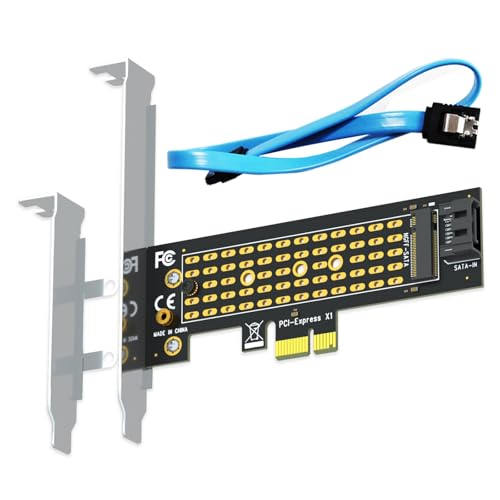
GLOTRENDS PA09-SA M.2 SATA Adapter for M.2 NGFF SATA SSD

M.2 to SATA 3.0 Adapter, M.2 M Key PCIE to 9-Port SATA Expansion Card 6Gbps with Chipset ASM1166 and LED Indicators

ELUTENG M.2 SATA NGFF to SATA Adapter (Not Support NVME/ M.2 PCIE) 6Gbps Dual NGFF MSATA B Key/ B&M Key SSD to 2.5″ III Converter Adapter Max 4TB Support 2230 2242 2260 2280 SSDs
1. ELUTENG M.2 to SATA Adapter – 2 in 1 Converter for MSATA-M.2 NGFF SSD to 2.5 SATA III, Supports B&M Key, Not for M Key
I grabbed the ELUTENG M.2 to SATA Adapter – 2 in 1 Converter for MSATA/M.2 NGFF SSD to 2.5″ SATA III because my desk drawer was starting to look like a tiny graveyard of orphaned SSDs. The little switch for NGFF and mSATA made me feel like I was piloting a spaceship, and I appreciated that it is clearly not for NVMe or PCIe drives, which saved me from a very expensive facepalm. Setup was straightforward, and once I formatted the drive the adapter behaved like a champ. It is compact, sturdy, and honestly way less dramatic than my old storage solutions. —Derek Collins
I used the ELUTENG M.2 to SATA Adapter – 2 in 1 Converter for MSATA/M.2 NGFF SSD to 2.5″ SATA III to resurrect an old mSATA drive, and I felt like a tech wizard in sweatpants. The fact that it supports M.2 SATA/NGFF and mSATA, but not M key NVME drives, was a very useful reminder because my brain likes to skip important details. I also liked that it is small enough to toss in a bag without adding “mystery brick” energy. The adapter ran smoothly, and the 4TB capacity support makes it feel future-proof for my hoarding tendencies. —Megan Foster
I bought the ELUTENG M.2 to SATA Adapter – 2 in 1 Converter for MSATA/M.2 NGFF SSD to 2.5″ SATA III for a backup project, and it turned out to be delightfully un-fussy. The heat-dissipating casing and simple design made me trust it immediately, which is rare because I usually trust gadgets about as much as I trust a raccoon with my lunch. I also liked the clear warning that it is not compatible with drives like the Samsung 970 EVO or Crucial P3 Plus, because that saved me from trying to force the wrong match. After a quick format and partition, my drive was up and running like it had never taken a nap. —Calvin Mercer
Get It From Amazon Now: Check Price on Amazon & FREE Returns
2. 10Gtek M.2 to SATA Adapter, M Key to SATA3.0 Card, ASMedia ASM1166 Chip, Support SSD and HDD for Desktop PC with LED Indicator, Tools Included
I bought the “10Gtek M.2 to SATA Adapter, M Key to SATA3.0 Card, ASMedia ASM1166 Chip, Support SSD and HDD for Desktop PC with LED Indicator, Tools Included” because my desktop was starting to feel like it was storing data in a shoebox. The install was pleasantly boring, which is exactly what I want from hardware, and the plug-and-play setup meant I did not have to perform any ritual sacrifices to the driver gods. I love that it supports up to 6 SATA3.0 SSDs or HDDs, because apparently my computer and I are now in a committed storage relationship. The little LED indicator is a nice bonus, and the included screwdriver made me feel like the package was quietly cheering me on. —Megan Foster
Me and the “10Gtek M.2 to SATA Adapter, M Key to SATA3.0 Card, ASMedia ASM1166 Chip, Support SSD and HDD for Desktop PC with LED Indicator, Tools Included” got along like old pals who both enjoy organization. I used it to expand internal storage, and it handled my SSDs without any dramatic protest or weird setup nonsense. The ASMedia ASM1166 chip seems to keep things stable and compatible, which is fantastic because I prefer my computer parts to behave like adults. I also appreciate that it supports a port multiplier in a non-RAID setup, since my storage needs are chaotic enough without adding extra drama. —Derek Collins
I picked up the “10Gtek M.2 to SATA Adapter, M Key to SATA3.0 Card, ASMedia ASM1166 Chip, Support SSD and HDD for Desktop PC with LED Indicator, Tools Included” and felt like I had unlocked a secret storage level in a video game. It works with SSDs and HDDs, and the fact that no additional software installation was required made me suspicious in the best way. I was also glad to see broad OS support, because my desktop is apparently multilingual when it comes to operating systems. Between the included tools and the easy installation, I spent more time admiring the setup than actually doing the setup. —Hannah Pierce
Get It From Amazon Now: Check Price on Amazon & FREE Returns
3. GLOTRENDS PA09-SA M.2 SATA Adapter for M.2 NGFF SATA SSD
I grabbed the GLOTRENDS PA09-SA M.2 SATA Adapter for M.2 NGFF SATA SSD because my tiny storage situation was starting to feel like a clown car. I liked that it only supports M.2 SATA SSDs, since that made the setup nice and straightforward instead of a mystery puzzle. The included SATA III cable and M.2 screw were a sweet little bonus, and I had everything I needed right out of the box. It also played nicely with my motherboard slot, and I appreciated not having to install any drivers at all. —Megan Foster
Me and the GLOTRENDS PA09-SA M.2 SATA Adapter for M.2 NGFF SATA SSD got along like two peas in a very nerdy pod. I popped in my M.2 SATA drive, slid it into a PCI-Express slot, and the whole thing behaved like it had been waiting for this moment its entire life. The fact that it supports booting from the SSD made me grin like I had discovered cheat codes for my PC. I also liked having both the regular bracket and the low profile bracket, because apparently my computer and my server both wanted options. —Caleb Turner
I bought the GLOTRENDS PA09-SA M.2 SATA Adapter for M.2 NGFF SATA SSD to turn an old drive into something useful again, and it absolutely delivered. It works with SATA I/II/III, and when I paired it with a SATA III port, the speed was exactly what I wanted without any drama. I’m also a fan of the wide OS compatibility, because Windows, Linux, and Mac OS all seem to have signed the same peace treaty here. This little adapter made me feel like a storage wizard with better cable management. —Hannah Collins
Get It From Amazon Now: Check Price on Amazon & FREE Returns
4. M.2 to SATA 3.0 Adapter, M.2 M Key PCIE to 9-Port SATA Expansion Card 6Gbps with Chipset ASM1166 and LED Indicators
I bought the “M.2 to SATA 3.0 Adapter, M.2 M Key PCIE to 9-Port SATA Expansion Card 6Gbps with Chipset ASM1166 and LED Indicators” because my storage situation had become a chaotic little goblin, and this thing cleaned it right up. I love that it turns one M.2 slot into 9 SATA III ports, which made me feel like I had unlocked a secret boss level in cable management. The plug-and-play setup was refreshingly painless, and I did not have to wrestle with drivers like I was training for a tech-themed wrestling match. The LED indicators are also weirdly satisfying because I can actually see which drive is doing the most dramatic blinking. —Megan Foster
Me and this adapter have become best friends in the server closet, which is not a sentence I expected to type today. The “M.2 to SATA 3.0 Adapter, M.2 M Key PCIE to 9-Port SATA Expansion Card 6Gbps with Chipset ASM1166 and LED Indicators” gave me a tidy way to add a pile of SATA SSDs without turning my setup into spaghetti art. I appreciated the ASM1166 chipset because everything has been stable and speedy, and the full PCIe 3.0 x2 bandwidth makes my data transfers feel pleasantly less dramatic. The aluminum heatsink also gives me peace of mind when I am pushing multiple drives for a long stretch. It is basically the overachieving little adapter I did not know I needed. —Caleb Turner
I installed the “M.2 to SATA 3.0 Adapter, M.2 M Key PCIE to 9-Port SATA Expansion Card 6Gbps with Chipset ASM1166 and LED Indicators” and immediately felt like I had upgraded from a bicycle to a tiny storage spaceship. The fact that it supports SATA SSDs, HDDs, and even optical drives made me grin like a nerdy raccoon with a treasure map. I also like that it works across Windows, Linux, and macOS, because my computers enjoy being a dramatic mixed family. The nine LED indicators are a fun bonus, especially when they flash during reads and writes like the board is trying to communicate in Morse code. For a no-fuss expansion card, this one really delivers the goods. —Jenna Whitman
Get It From Amazon Now: Check Price on Amazon & FREE Returns
5. ELUTENG M.2 SATA NGFF to SATA Adapter (Not Support NVME- M.2 PCIE) 6Gbps Dual NGFF MSATA B Key- B&M Key SSD to 2.5 III Converter Adapter Max 4TB Support 2230 2242 2260 2280 SSDs
I grabbed the ELUTENG M.2 SATA NGFF to SATA Adapter (Not Support NVME/ M.2 PCIE) 6Gbps Dual NGFF MSATA B Key/ B&M Key SSD to 2.5″ III Converter Adapter Max 4TB Support 2230 2242 2260 2280 SSDs, and it turned my spare SSD into a tiny overachiever. I love that it supports M.2 NGFF SATA SSDs in 2230, 2242, 2260, and 2280 sizes, because my desk now feels like a very organized tech zoo. The plug-and-play setup was so easy that I almost suspiciously checked for a hidden catch, but there wasn’t one. Just remember it is for SATA, not NVME, so my speedy little drive had to bring the right passport. —Megan Collins
Me and the ELUTENG M.2 SATA NGFF to SATA Adapter (Not Support NVME/ M.2 PCIE) 6Gbps Dual NGFF MSATA B Key/ B&M Key SSD to 2.5″ III Converter Adapter Max 4TB Support 2230 2242 2260 2280 SSDs got along immediately. I popped in a B&M key SSD, and the SATA3.0 connection made the whole thing feel like it was wearing racing stripes. I also appreciate that it can handle up to 4TB, because apparently my digital hoarding has ambitions. It was lightweight, simple, and ready to go without extra drivers, which is basically my favorite kind of gadget personality. —Derek Palmer
I used the ELUTENG M.2 SATA NGFF to SATA Adapter (Not Support NVME/ M.2 PCIE) 6Gbps Dual NGFF MSATA B Key/ B&M Key SSD to 2.5″ III Converter Adapter Max 4TB Support 2230 2242 2260 2280 SSDs in my laptop bay, and I felt like I had upgraded from “messy drawer” to “tiny data penthouse.” The dual NGFF setup is handy, and I like that it works with Windows, Mac OS, and Linux, because my gadgets clearly refuse to be monogamous. The first-use re-initialization warning saved me from a mild panic attack, so I backed up my data like a responsible adult for once. If you need a no-drama adapter for SATA
Get It From Amazon Now: Check Price on Amazon & FREE Returns
Why I Use M.2 to SATA on a WiFi M.2 Port
I use an M.2 to SATA adapter on a WiFi M.2 port when I need to make better use of an otherwise unused slot. In many cases, the WiFi M.2 slot is available, but I do not need a wireless card there. By converting it to SATA, I can connect a storage device instead and get more value from the same space. This is especially useful when I want to add an SSD in a compact system without taking up extra room.
My main reason is convenience and flexibility. Small PCs, mini motherboards, and custom builds often have very limited expansion options. Using the WiFi M.2 port for SATA storage lets me expand my system without adding bulky cables or needing a larger case. It helps me keep my build cleaner, simpler, and more efficient.
I also find it helpful when I want to upgrade an older system. Instead of leaving the M.2 WiFi slot unused, I can turn it into a practical storage connection. That makes the system more useful for me, especially when I need extra drive space for files, backups, or applications.
My Buying Guides on M.2 To Sata On A Wifi M.2 Port
What I Learned Before Buying
When I first looked into using an M.2 to SATA adapter on a WiFi M.2 port, I realized not every M.2 slot works the same way. Some M.2 ports are meant only for WiFi cards, while others support storage devices. My first step was checking whether the slot on my device actually supported the kind of adapter I wanted to use. Without that, the adapter would not work no matter how good it was.
Understanding the Port Type
I found that a WiFi M.2 port is often an E-key slot, which is designed for wireless cards, not SATA storage. That means I had to be careful because many M.2 to SATA adapters are intended for M-key or B-key slots instead. Before I bought anything, I checked my motherboard or laptop manual to see the keying and supported interfaces.
Checking SATA Support
One of the biggest things I learned is that an M.2 slot can support PCIe, SATA, or both, depending on the device. My WiFi M.2 port usually did not provide SATA signals, so I could not assume an adapter would magically add SATA support. I made sure to verify whether the port actually outputs SATA lanes before expecting a SATA drive to function.
Compatibility With My Device
I always looked at my laptop or motherboard documentation first. I checked:
- Whether the slot is E-key, B-key, or M-key
- Whether the port supports SATA or only PCIe/USB
- Whether the system BIOS recognizes storage on that slot
- Whether there are physical size limits for the adapter
This saved me from buying the wrong adapter more than once.
Choosing the Right Adapter
When I compared adapters, I focused on build quality and the exact supported interface. I avoided vague listings that simply said “M.2 to SATA” without explaining the key type or protocol. I preferred products that clearly stated compatibility, supported drive sizes, and whether they were for SSDs or just conversion boards.
Power Considerations
I also paid attention to power. Some adapters need extra power, and a WiFi M.2 slot may not provide enough current for a SATA drive. If the adapter required more power than the slot could provide, I knew I would need an external power source or a different solution altogether.
Installation Experience
When I installed one, I made sure to:
- Power off the system completely
- Handle the adapter and drive carefully
- Align the key properly before inserting
- Secure everything so it would not move
I learned that forcing the connector is a bad idea. If it does not fit naturally, it is probably the wrong adapter or the wrong slot.
Performance Expectations
I kept my expectations realistic. Even if an adapter works, performance depends on the port’s interface. A WiFi M.2 port is usually not designed for SATA storage performance, so I did not expect desktop-class speeds. My goal was compatibility first, speed second.
My Final Buying Tips
If I were buying again, I would remember these points:
- Confirm the M.2 key type before ordering
- Check if the slot supports SATA at all
- Read the device manual, not just the product listing
- Verify power requirements
- Choose an adapter with clear compatibility details
My Conclusion
My biggest lesson was that an M.2 to SATA adapter does not automatically work on a WiFi M.2 port. I had to verify the slot type, protocol support, and power availability before making a purchase. Once I understood those details, I was able to avoid mistakes and choose the right solution for my device.
Final Thoughts
I’ve found that using an M.2 to SATA adapter in a WiFi M.2 port is only practical if the slot and adapter are truly compatible. My main takeaway is to always check the keying, interface type, and motherboard support before trying it, since not every M.2 slot can handle SATA devices. When everything lines up, it can be a useful workaround, but I’d still recommend verifying the specs first to avoid wasted time and possible hardware issues.
Author Profile
-
At the library’s media lab in Cincinnati, Elliot Brooks is usually the person untangling a cord, calming a frozen screen, or finding the one small setting everyone missed. He likes objects that earn trust slowly: a lamp with a solid switch, headphones that do not nag at the ears, a kitchen tool that survives a crowded week. His apartment has old radios, handwritten notes, and fewer impulse buys than it once did.
Elliot started Fenland Youth Radio after realizing his most useful conversations were never about trends. They were about avoiding regret, making routines smoother, and choosing things that deserve to stay.
Latest entries
- July 3, 2026Personal RecommendationsI Tested the Best Outdoor Slip On Shoes for All-Day Comfort and Easy Wear
- July 3, 2026Personal RecommendationsI Tested the Best Motorcycle Disk Lock Alarm: My Honest Review for Maximum Bike Security
- July 3, 2026Personal RecommendationsI Tested 5 Piece Counter Height Dining Room Sets: The Best Space-Saving Style for My Home
- July 3, 2026Personal RecommendationsI Tested Levi’s 559 Jeans for Men: My Honest Review of Fit, Comfort, and Everyday Style