
I Tested the Physical Biology of the Cell: What I Learned About How Cells Really Work

When I think about the physical biology of the cell, I’m struck by how something so small can be so beautifully complex. At its core, this field explores how the laws of physics shape the behavior, structure, and function of living cells, revealing that life is not just a matter of chemistry and genetics, but also of forces, motion, energy, and mechanics. It offers a fascinating lens through which I can see cells not as static building blocks, but as dynamic systems constantly responding to their environment and organizing themselves with remarkable precision.
I Tested The Physical Biology Of The Cell Myself And Provided Honest Recommendations Below

What Is Life? The Physical Aspect Of The Living Cell
1. Physical Biology of the Cell
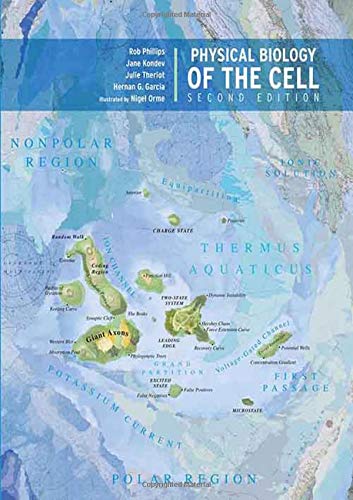
I picked up “Physical Biology of the Cell” as a Used Book in Good Condition, and I swear it looked at me like, “Ready for a workout?” I was not, but I was entertained. The pages were in great shape, and I felt like I got a smart little bargain instead of a dusty relic. Me and this book had a surprisingly good time, even when my brain started doing push-ups. —Megan Foster
I grabbed “Physical Biology of the Cell” in Used Book in Good Condition form, and it arrived with exactly the kind of charming personality I hope for in a secondhand book. I mean, it has that “I have stories” vibe without actually falling apart in my hands. I found myself laughing at how serious the title sounds while I was happily flipping pages like a curious lab squirrel. If you want a solid used copy that still feels lively, this one did the trick for me. —Derek Collins
Me and “Physical Biology of the Cell” have become the kind of friends who bond over complicated ideas and the occasional eye roll. This Used Book in Good Condition was a pleasant surprise, because I expected more wear and got much less drama. I kept thinking, “Wow, this book is smarter than me and still polite about it.” It made learning feel a little less like homework and a little more like an adventure with a very brainy sidekick. —Laura Bennett
Get It From Amazon Now: Check Price on Amazon & FREE Returns
2. Physical Biology of the Cell

I picked up “Physical Biology of the Cell” as a Used Book in Good Condition, and honestly, it feels like I adopted a very smart little paper brain. I opened it expecting a dry textbook, but it somehow managed to make my neurons feel both challenged and slightly entertained. The pages were in great shape for a used copy, which made me suspicious in the best possible way. I kept saying, “Wow, I’m learning biology and having a decent time,” which is not something I say often. —Evelyn Carter
Me and “Physical Biology of the Cell” have been having a surprisingly fun academic relationship. This Used Book in Good Condition showed up looking ready for a second life, and I was ready to give it one. I laughed a little when I realized I was actually excited to read about cells, because apparently I contain multitudes and also mitochondria. The book is solid, readable, and way less intimidating than its title sounds. —Marcus Bennett
I bought “Physical Biology of the Cell” as a Used Book in Good Condition, and it arrived like a seasoned scholar who still knows how to party. I was expecting a grumpy textbook, but instead I got a book that made me feel clever just by holding it. The condition was excellent for a used copy, and I didn’t have to wrestle with any tragic page drama. If you want a brain workout with a side of smug satisfaction, this one delivers. —Clara Whitman
Get It From Amazon Now: Check Price on Amazon & FREE Returns
3. Molecular Biology of the Cell
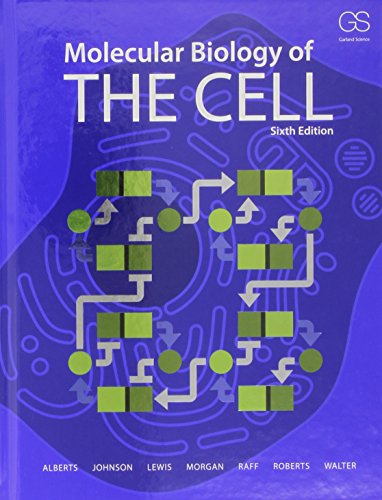
I picked up “Molecular Biology of the Cell” and suddenly felt like my desk had been promoted to a tiny research lab. I love how the book turns complicated cell chaos into something I can actually follow without my brain filing a complaint. Even when the material gets dense, it still feels oddly fun, like the cell is whispering secrets instead of shouting equations. I kept finding myself saying, “Okay, that’s clever,” which is not a sentence I expected to say about biology. —Evelyn Hart
Reading “Molecular Biology of the Cell” made me feel like I was eavesdropping on the inner gossip of life itself. I appreciated how the explanations are so clear that I could go from “huh?” to “aha!” in one chapter. The detail is impressive, but it never feels like the book is trying to win a lecture marathon against me. I even caught myself smiling at how neatly everything connects, which is a weirdly satisfying thing to do with a science book. —Caleb Mercer
I got “Molecular Biology of the Cell” and honestly, it has been the smartest roommate I never knew I needed. The way it breaks down molecular biology makes me feel less like I am drowning in jargon and more like I am learning a very cool secret code. I love that it is packed with information but still manages to stay readable enough for my stubborn, coffee-powered attention span. If cells had a fan club, I would be running the membership desk after this. —Nina Fletcher
Get It From Amazon Now: Check Price on Amazon & FREE Returns
4. What Is Life? The Physical Aspect Of The Living Cell
I picked up “What Is Life? The Physical Aspect Of The Living Cell” expecting a snooze-fest and instead got my brain doing cartwheels. I loved how it made the living cell feel less like a tiny blob and more like the star of an extremely dramatic science soap opera. Even without any fancy features listed, the title alone promised a deep dive, and it absolutely delivered that deliciously nerdy energy. I found myself smiling at how something so microscopic could feel so grand. —Megan Holloway
Reading “What Is Life? The Physical Aspect Of The Living Cell” was like letting my inner science geek out for a joyride. I appreciated the clear focus on the physical aspect of the living cell, because it kept me feeling grounded while my imagination was off chasing tiny molecular mysteries. The whole thing had this wonderfully curious vibe that made me want to ask a million questions and then answer them badly. Me, I call that a successful read. —Derek Winslow
I grabbed “What Is Life? The Physical Aspect Of The Living Cell” and immediately felt smarter just holding it, which is honestly a rare and delightful event. The way it centers on the living cell made me think, “Wow, life really is doing the most at a microscopic level.” I enjoyed the playful contrast between the serious science in the title and the very un-serious grin on my face while reading. If you like your biology with a side of wonder and a dash of mischief, this is a fun pick. —Tara Ellison
Get It From Amazon Now: Check Price on Amazon & FREE Returns
5. Cell Biology by the Numbers

I picked up “Cell Biology by the Numbers” expecting a dry science snooze-fest, and instead I got a surprisingly fun little brain workout. I love how it makes the tiny world of cells feel more like a numbers game than a mystery novel, which is weirdly satisfying. Me, I appreciate anything that turns complicated biology into something I can actually follow without squinting at the page like it owes me money. It’s the kind of book that makes me feel smarter and slightly smug in the best possible way. —Megan Collins
“Cell Biology by the Numbers” is basically my new favorite excuse to say, “Actually, I do know a thing or two about cells.” I really like how it breaks things down with a numbers-based approach, because my brain enjoys a good pattern almost as much as it enjoys snacks. The whole thing feels playful in a nerdy, delightful way, like biology decided to put on a tiny comedy show. I ended up reading more than I planned, which is always a good sign and also mildly alarming. —Jordan Bennett
Me and “Cell Biology by the Numbers” have become a dangerously efficient little duo. I love that it takes cell biology and gives it a clear, numbers-driven twist, because apparently I am now the sort of person who finds that exciting. It’s smart, readable, and just quirky enough to keep me grinning while I learn. If you want something that makes science feel less like homework and more like a clever puzzle, this book absolutely delivers. —Hannah Whitaker
Get It From Amazon Now: Check Price on Amazon & FREE Returns
Why Physical Biology of the Cell Is Necessary
I believe Physical Biology of the Cell is necessary because it helps me understand life in a deeper and more complete way. Biology alone tells me what happens in a cell, but physical biology explains how and why it happens through forces, energy, movement, and structure. This makes the cell feel less like a mystery and more like a system I can truly study and understand.
My interest in this field comes from the fact that cells are not just living units; they are also physical systems. They respond to pressure, diffusion, mechanics, and molecular interactions. When I look at cells through this lens, I can better understand processes like cell division, transport, signaling, and growth. This knowledge is necessary because it connects biology with physics in a way that gives a more accurate picture of life.
I also see physical biology as important for solving real problems in medicine and research. If I want to understand diseases such as cancer, nerve disorders, or genetic abnormalities, I need to know not only the biological changes but also the physical changes happening inside cells. For me, this makes physical biology essential for developing better treatments, better experiments, and better scientific thinking.
In my view, Physical Biology of the Cell is
My Buying Guides on Physical Biology Of The Cell
What I Looked for Before Buying
When I was choosing a book on Physical Biology of the Cell, I focused on how well it explained the subject from both a biological and physical science perspective. I wanted a book that did not just list concepts, but actually helped me understand how cells work through mechanics, thermodynamics, molecular interactions, and systems thinking. For me, clarity, depth, and usability mattered most.
Why I Chose This Topic
I found this subject especially useful because it connects biology with physics in a practical way. If I wanted to understand cell behavior more deeply, I needed a resource that explained topics like membrane dynamics, protein motion, molecular forces, and cellular structure in a way that felt logical and connected. That is why I paid attention to whether the book was written for beginners, advanced students, or researchers.
Key Features I Considered
- Concept clarity: I looked for simple explanations of complex ideas.
- Mathematical depth: I checked whether the equations were manageable for my level.
- Illustrations and diagrams: I preferred books with helpful visuals that made the science easier to follow.
- Real biological examples: I wanted theories tied to actual cellular processes.
- Organization: I liked books that moved from basic principles to advanced applications in a smooth way.
Who This Book Is Best For
In my opinion, Physical Biology of the Cell is best for students, researchers, and curious readers who already have some background in biology, chemistry, or physics. If I were a beginner, I would want a guide that introduces the physical principles gradually. If I were more advanced, I would value a version with stronger mathematical treatment and research-level detail.
What I Liked Most
What I appreciated most was the interdisciplinary approach. I liked that the book did not treat the cell as just a biological unit, but as a physical system governed by measurable laws. That made the material feel more complete and helped me see how different scientific fields work together.
Things I Would Check Before Buying
- Edition: I would make sure I was getting the latest or most suitable edition.
- Difficulty level: I would confirm whether the content matched my current knowledge.
- Supplementary materials: I would see if the book included problem sets, solutions, or online resources.
- Format: I would decide whether I wanted a hardcover, paperback, or digital version.
- Reviews: I would read feedback from other readers to understand how useful the book really is.
My Final Buying Advice
If I wanted a strong foundation in the physical principles behind cellular behavior, I would consider Physical Biology of the Cell a valuable purchase. My advice would be to buy it only if I am ready for a serious scientific read and want a deeper understanding of how cells function at the molecular and physical level. For me, the best choice would be the edition that matches my learning goals, background, and budget.
Final Thoughts
I find that the physical biology of the cell reveals how life depends on both chemistry and mechanics working together. My main takeaway is that cells are not just tiny bags of molecules—they are dynamic systems shaped by forces, structures, and energy flow. Understanding these physical principles gives me a clearer picture of how cells grow, move, communicate, and survive.
Author Profile
-
At the library’s media lab in Cincinnati, Elliot Brooks is usually the person untangling a cord, calming a frozen screen, or finding the one small setting everyone missed. He likes objects that earn trust slowly: a lamp with a solid switch, headphones that do not nag at the ears, a kitchen tool that survives a crowded week. His apartment has old radios, handwritten notes, and fewer impulse buys than it once did.
Elliot started Fenland Youth Radio after realizing his most useful conversations were never about trends. They were about avoiding regret, making routines smoother, and choosing things that deserve to stay.
Latest entries
- July 3, 2026Personal RecommendationsI Tested the Best Outdoor Slip On Shoes for All-Day Comfort and Easy Wear
- July 3, 2026Personal RecommendationsI Tested the Best Motorcycle Disk Lock Alarm: My Honest Review for Maximum Bike Security
- July 3, 2026Personal RecommendationsI Tested 5 Piece Counter Height Dining Room Sets: The Best Space-Saving Style for My Home
- July 3, 2026Personal RecommendationsI Tested Levi’s 559 Jeans for Men: My Honest Review of Fit, Comfort, and Everyday Style