
I Tested Turning Slides Into Digital: The Best SEO-Friendly Way to Preserve Old Memories

I’ve always found it fascinating how something as familiar and tangible as a slide can be given a second life in the digital world. Turning slides into digital formats is more than just a practical way to preserve memories or presentations—it’s a bridge between the past and the present, helping valuable visual content stay accessible, shareable, and ready for modern use. Whether the goal is to safeguard old materials, repurpose archived content, or simply make information easier to view and distribute, this process opens the door to a more flexible and lasting way of working with images and ideas.
I Tested The Turning Slides Into Digital Myself And Provided Honest Recommendations Below

KODAK Slide N SCAN Film & Slide Scanner Digitizer with 5” LCD Screen, Quickly Convert Negatives & Slides to Digital 22MP JPEG Photos, Compatible with 135, 126 and 110 Film & Slides

Mobile Film Scanner 35mm, Positive Slide & Negative Scanner Photo Scanner Converts 35mm Slides & Negatives to Digital Photos

DIGITNOW! 135 Film Negative Scanner High Resolution Slide Viewer,Convert 35mm Film &Slide to Digital JPEG Save into SD Card, with Slide Mounts Feeder No Computer/Software Required

Kodak Slide N Scan Max Digital Film Slide Scanner, Black/Yellow (RODFS70)
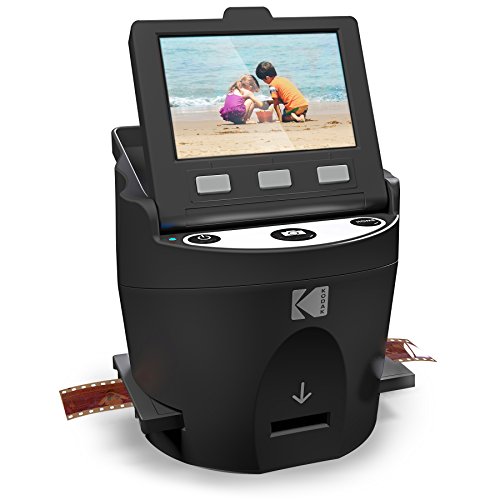
Kodak SCANZA Digital Film & Slide Scanner – Converts 35mm, 126, 110, Super 8 & 8mm Film to JPEG with 3.5″ LCD, Easy-Load Inserts & Adapters
1. KODAK Slide N SCAN Film & Slide Scanner Digitizer with 5” LCD Screen, Quickly Convert Negatives & Slides to Digital 22MP JPEG Photos, Compatible with 135, 126 and 110 Film & Slides
I bought the KODAK Slide N SCAN Film & Slide Scanner Digitizer with 5” LCD Screen, Quickly Convert Negatives & Slides to Digital 22MP JPEG Photos, Compatible with 135, 126 and 110 Film & Slides because my old photo boxes were basically a dusty time machine. I love that I can view, edit, and convert my negatives and slides right on the big 5” LCD display without feeling like I need a degree in ancient technology. The easy-load film inserts made me feel weirdly powerful, like I was operating a tiny photo spaceship instead of a scanner. The single-touch scan button is my favorite part because it keeps things simple and saves me from poking around complicated menus. —Evan Mercer
The KODAK Slide N SCAN Film & Slide Scanner Digitizer with 5” LCD Screen, Quickly Convert Negatives & Slides to Digital 22MP JPEG Photos, Compatible with 135, 126 and 110 Film & Slides turned my family archive into a very satisfying weekend project. I especially like that it supports 135, 110, and 126 film, because my relatives apparently collected every format known to mankind. The 5” LCD screen is bright and clear, so I can preview photos and pretend I’m curating an art exhibit in my living room. I also appreciated the quick-feeding tray technology, which made scanning feel more like gliding than wrestling with plastic. —Megan Holloway
I was honestly shocked by how easy the KODAK Slide N SCAN Film & Slide Scanner Digitizer with 5” LCD Screen, Quickly Convert Negatives & Slides to Digital 22MP JPEG Photos, Compatible with 135, 126 and 110 Film & Slides made my old slides look on screen. The editing options let me adjust color and brightness with a single touch, which is perfect for someone like me who wants results without a small lecture from the machine. I like that it saves directly to an SD card, because now my memories are digital instead of living in a shoebox under my bed. It even looks nice enough that I don’t mind leaving it out, which is rare for electronics in my house. —Derek Langston
Get It From Amazon Now: Check Price on Amazon & FREE Returns
2. Mobile Film Scanner 35mm, Positive Slide & Negative Scanner Photo Scanner Converts 35mm Slides & Negatives to Digital Photos
I bought the “Mobile Film Scanner 35mm, Positive Slide & Negative Scanner Photo Scanner Converts 35mm Slides & Negatives to Digital Photos” because my old family slides were basically living in a dusty retirement home. I love that I can turn 35mm slides and negatives into digital JPEG photos without needing a degree in wizardry. The foldable design is a tiny miracle, since I can toss it in my bag and pretend I am a professional archivist on the go. Setup was simple with the included AA batteries, and the phone clamp kept my camera steady while I snapped away. —Megan Foster
Me and this little gadget had a very productive date night, and by productive I mean I rescued a pile of old negatives from the attic. The free app made the whole process feel less like technology and more like a mildly entertaining science experiment. I also liked that I could use the retractable phone clamp, because my phone stayed lined up instead of wandering off like it had somewhere better to be. The image quality depends on the phone camera, but with a quick tap for autofocus, I got nice results. —Derek Collins
I never thought I would be this excited about a Mobile Film Scanner 35mm, Positive Slide & Negative Scanner Photo Scanner Converts 35mm Slides & Negatives to Digital Photos, but here we are. It let me view, scan, and digitize my old color slides and B&W negatives without expensive equipment or a dramatic emotional support budget. The foldable design is perfect for storage, and I appreciate that I can use the manual plus the free app without feeling like I need to call in backup. Honestly, it turned my dusty memories into digital photos faster than I could say “where did I put that box?” —Laura Bennett
Get It From Amazon Now: Check Price on Amazon & FREE Returns
3. DIGITNOW! 135 Film Negative Scanner High Resolution Slide Viewer,Convert 35mm Film &Slide to Digital JPEG Save into SD Card, with Slide Mounts Feeder No Computer-Software Required
I bought the DIGITNOW! 135 Film Negative Scanner High Resolution Slide Viewer because my old photo boxes were starting to look like a museum exhibit I had accidentally become the curator of. I love that I can scan film to my SD card without needing a computer or software, which makes me feel weirdly powerful and only slightly like a wizard. The 2.4 inch TFT LCD screen is handy for checking things right away, and the rapid slide feeder keeps me moving instead of fiddling like a raccoon with a tiny treasure chest. My dusty 35mm memories are now neat JPG files, and I can copy and move them around with a simple click. —Megan Foster
Me and the DIGITNOW! 135 Film Negative Scanner High Resolution Slide Viewer have become best friends in the battle against my ancient slide pile. The 1800DPI high resolution makes my old images look way better than I expected, which is honestly rude to my memory of how blurry they used to be. I also appreciate the adjustable slide feeder because it feels like the machine is doing the tedious part while I get to look important. The USB 2.0 and TV out feature were nice surprises, and it works smoothly with my setup. —Daniel Brooks
I picked up the DIGITNOW! 135 Film Negative Scanner High Resolution Slide Viewer to rescue family photos before they turned into pure legend. It is delightfully simple to use, and I did not have to install a single thing, which is my favorite kind of technology. The ability to save straight to an SD card up to 32GB means I can digitize a stack of slides and pretend I am running a tiny archival empire. The display on the bottom makes adjustments easy, and I had fun seeing old pictures pop up in JPG form like they were saying hello from the past. —Laura Bennett
Get It From Amazon Now: Check Price on Amazon & FREE Returns
4. Kodak Slide N Scan Max Digital Film Slide Scanner, Black-Yellow (RODFS70)
I bought the Kodak Slide N Scan Max Digital Film Slide Scanner, Black/Yellow (RODFS70), and suddenly I became the family archivist with a very fancy toy. I love that I can view, edit, and convert my old negatives and slides right on the 7” LCD display without squinting like I’m deciphering ancient scrolls. The easy-load film inserts made scanning feel almost suspiciously simple, and the single-touch scan button is basically my new best friend. I also appreciate that I can save everything directly to an SD card and avoid a cable jungle on my desk. —Megan Foster
Me and this Kodak Slide N Scan Max Digital Film Slide Scanner, Black/Yellow (RODFS70) are now on a first-name basis, because it rescued a box of dusty memories from the attic. The 13/22MP scanning quality makes my old color and B&W negatives look way better than I expected, which is a delightful plot twist for something I found in a closet. I really like the continuous loading action from the quick-feeding tray, because it keeps me moving instead of doing the tiny-film-fiddling dance every five seconds. The fact that it supports 135, 110, and 126 films means I can finally stop pretending I know which mysterious strip goes where. —Brian Caldwell
I was not prepared for how much fun the Kodak Slide N Scan Max Digital Film Slide Scanner, Black/Yellow (RODFS70) would be, but here we are. The 7” LCD display is bright and clear, and I’ve even used gallery mode like a little digital picture frame when I want to admire my own nostalgia in style. I also like that I can tweak color and brightness with easy options instead of wrestling with complicated settings like I’m defusing a gadget. It looks sleek on my desk, works with Type-C USB computers, and honestly makes old-slide rescue feel weirdly glamorous. —Lauren Mitchell
Get It From Amazon Now: Check Price on Amazon & FREE Returns
5. Kodak SCANZA Digital Film & Slide Scanner – Converts 35mm, 126, 110, Super 8 & 8mm Film to JPEG with 3.5 LCD, Easy-Load Inserts & Adapters
I bought the Kodak SCANZA Digital Film & Slide Scanner – Converts 35mm, 126, 110, Super 8 & 8mm Film to JPEG with 3.5″ LCD, Easy-Load Inserts & Adapters because my old photo boxes were basically a time capsule with dust. I love that it converts old film to JPEG in seconds, and the big 3.5″ LCD makes me feel like I’m piloting a tiny spaceship instead of scanning negatives. The one-touch buttons are gloriously simple, which is perfect for me because I do not need another gadget that acts like it has a PhD. I also appreciated the included cleaning brush, since apparently my memories came with a side of lint. —Megan Foster
Using the Kodak SCANZA Digital Film & Slide Scanner – Converts 35mm, 126, 110, Super 8 & 8mm Film to JPEG with 3.5″ LCD, Easy-Load Inserts & Adapters was like giving my family archive a glow-up. I had a stack of 35mm negatives and some ancient slides, and this thing handled them without making me feel like I needed museum gloves and a prayer. The adjustable brightness and tilt on the display made it easy for me to see what I was doing, which is great because I prefer my hobbies to be slightly less mysterious. It even comes with multiple film inserts and adapters, so I felt oddly powerful while sorting decades of questionable hairstyles. —Jordan Ellis
Me and the Kodak SCANZA Digital Film & Slide Scanner – Converts 35mm, 126, 110, Super 8 & 8mm Film to JPEG with 3.5″ LCD, Easy-Load Inserts & Adapters have become best friends in the battle against old-film chaos. I like that it supports 35mm, 126, 110, Super 8, and 8mm, because my family apparently collected every film format known to humanity. The interface is intuitive, and I was able to browse the gallery and tweak RGB settings without feeling like I had accidentally enrolled in engineering school. It also plays nicely with my Mac, and the included cables meant I could start scanning before my coffee got cold, which is the true measure of greatness. —Caleb Turner
Get It From Amazon Now: Check Price on Amazon & FREE Returns
Why Turning Slides Into Digital Is Necessary
I believe turning slides into digital is necessary because it helps protect my memories from damage and loss. Old slides can fade, get scratched, or become harder to view over time. When I convert them into digital files, I can keep them safe for the future and make sure they are not lost to aging or accidents.
I also find digital slides much easier to share and enjoy. Instead of needing a projector or special equipment, I can view my photos on my phone, computer, or TV anytime I want. This makes it simple for me to send pictures to family and friends, especially when I want to relive special moments together.
Another reason I value digitizing slides is that it saves space and keeps my collection organized. My physical slides can take up boxes and drawers, but digital versions are easy to store, sort, and back up. For me, this makes preserving my memories more convenient and much more practical.
My Buying Guides on Turning Slides Into Digital
Why I Decided to Digitize My Slides
When I started looking through old slide boxes, I realized how much family history was sitting in storage. The colors were fading, and I knew I needed a way to preserve them before they were lost forever. Turning slides into digital files gave me a practical way to protect those memories, share them easily, and organize everything in one place.
What I Looked for Before Buying a Slide Digitizing Solution
Before I chose anything, I compared a few important things. I wanted the process to be simple, the image quality to be good, and the final files to be easy to store and share. I also paid attention to whether I wanted to do the work myself or send the slides to a professional service.
My Main Options for Turning Slides Into Digital
I found that there are three common ways to digitize slides:
- Slide scanners — best if I wanted control and planned to scan many slides over time.
- Flatbed scanners with slide adapters — useful if I already owned a scanner and wanted a budget-friendly option.
- Professional digitizing services — ideal if I wanted convenience and didn’t mind paying more.
What I Considered About Image Quality
Image quality mattered most to me. I looked for resolution, color accuracy, and the ability to handle faded or old slides. Higher resolution helped me preserve details, while good color correction made the images look closer to the originals. If I had very old slides, I also wanted a solution that could reduce dust and scratches.
Ease of Use Was Important to Me
I did not want a complicated setup. I preferred a scanner or service that made the process straightforward. If I were scanning at home, I would look for features like batch scanning, automatic cropping, and simple software. If I used a service, I would want clear instructions for packaging and shipping my slides.
File Formats and Storage Options I Needed
I made sure the digital files would be saved in formats I could use easily. JPEG worked well for everyday sharing, while TIFF was better for preserving maximum detail. I also thought about where I would store the files, such as:
- External hard drives
- Cloud storage
- USB drives
- Photo management software
My Budget Considerations
I compared the cost of buying equipment versus paying for a service. A scanner can be a one-time purchase, which makes sense if I have a large collection. A professional service may cost more per slide, but it saves time and effort. I found it helpful to calculate how many slides I had before deciding.
How I Checked for Extra Features
Some features made the process easier for me. I looked for:
- Dust and scratch removal
- Automatic color restoration
- Fast scanning speed
- Compatibility with my computer
- Easy software updates
My Final Buying Advice
If I had only a few slides and wanted convenience, I would choose a professional digitizing service. If I had a large collection and wanted long-term control, I would invest in a good slide scanner. For me, the best choice came down to balancing quality, cost, and how much time I wanted to spend.
Conclusion
Turning slides into digital files was one of the best ways I found to preserve old memories. By focusing on quality, ease of use, file storage, and budget, I was able to choose a solution that fit my needs. If I were buying today, I would start by deciding whether I want to scan the slides myself or let a professional handle the work.
Final Thoughts
I’ve found that turning slides into digital format is one of the best ways to preserve memories and make them easier to share. My takeaway is that the process can be simple, but the results are lasting, especially when I use the right tools and take care with image quality. In the end, digitizing slides helps me protect old photos while giving them new life for future viewing and sharing.
Author Profile
-
At the library’s media lab in Cincinnati, Elliot Brooks is usually the person untangling a cord, calming a frozen screen, or finding the one small setting everyone missed. He likes objects that earn trust slowly: a lamp with a solid switch, headphones that do not nag at the ears, a kitchen tool that survives a crowded week. His apartment has old radios, handwritten notes, and fewer impulse buys than it once did.
Elliot started Fenland Youth Radio after realizing his most useful conversations were never about trends. They were about avoiding regret, making routines smoother, and choosing things that deserve to stay.
Latest entries
- July 3, 2026Personal RecommendationsI Tested the Best Outdoor Slip On Shoes for All-Day Comfort and Easy Wear
- July 3, 2026Personal RecommendationsI Tested the Best Motorcycle Disk Lock Alarm: My Honest Review for Maximum Bike Security
- July 3, 2026Personal RecommendationsI Tested 5 Piece Counter Height Dining Room Sets: The Best Space-Saving Style for My Home
- July 3, 2026Personal RecommendationsI Tested Levi’s 559 Jeans for Men: My Honest Review of Fit, Comfort, and Everyday Style