
I Tested USB Type C Headers: My Honest Guide to Faster, Cleaner Front-Panel Connectivity

I’ve noticed how quickly USB-C has become the standard connector in modern tech, and one component that often goes overlooked is the USB Type C Header. It may not be the most visible part of a system, but it plays an important role in enabling front-panel USB-C connectivity and making devices more versatile and user-friendly. As more motherboards, cases, and peripherals adopt this connection, understanding the USB Type C Header has become increasingly relevant for anyone interested in building, upgrading, or simply getting more from their hardware.
I Tested The Usb Type C Header Myself And Provided Honest Recommendations Below
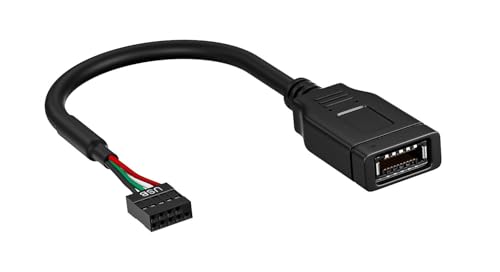
SSSUWP Motherboard USB 2.0 to Type C Front Panel Cable, USB3.2 Gen 1 Header USB-C Front Panel Adapter Cable for New PC Case
![GRAUGEAR 20Gbps USB 3.2 Gen 2x2 USB-C Front Panel Type-C Adapter, Motherboard Header Extension Cable, USB-C to USB3.2 Type-E Key-A 20-Pin Connector with PCIe Bracket, 23.6 in [G-AD-ETC-10G]](https://m.media-amazon.com/images/I/31hFntKplHL._SL500_.jpg)
GRAUGEAR 20Gbps USB 3.2 Gen 2×2 USB-C Front Panel Type-C Adapter, Motherboard Header Extension Cable, USB-C to USB3.2 Type-E Key-A 20-Pin Connector with PCIe Bracket, 23.6 in [G-AD-ETC-10G]

JoyReken USB Front Panel Adapter, Vertical USB C Header Adapter, USB 3.1 Type-E Key-A to USB 3.0 20Pin Header Converter for Type C Motherboard
![GRAUGEAR 20Gbps USB3.2 Gen2x2 USB-C Front Panel Adapter, Motherboard Header Extension Cable, USB-C and USB to USB3.2 Type-E Key-A 20-Pin and 19-Pin USB3.0 Connectors with PCIe Bracket[G-AD-ETC2A-20G]](https://m.media-amazon.com/images/I/41UV72MMqML._SL500_.jpg)
GRAUGEAR 20Gbps USB3.2 Gen2x2 USB-C Front Panel Adapter, Motherboard Header Extension Cable, USB-C and USB to USB3.2 Type-E Key-A 20-Pin and 19-Pin USB3.0 Connectors with PCIe Bracket[G-AD-ETC2A-20G]

Bejavr USB 2.0 to USB 3.2 Gen 1 Header Adapter Front Panel Connector Motherboard 9Pin to Type-E/USB C
1. SSSUWP Motherboard USB 2.0 to Type C Front Panel Cable, USB3.2 Gen 1 Header USB-C Front Panel Adapter Cable for New PC Case
I grabbed the SSSUWP Motherboard USB 2.0 to Type C Front Panel Cable for a little PC case makeover, and honestly, it felt like giving my old motherboard a tiny tech glow-up. I liked that it turns a 9pin USB 2.0 header into a front panel Type C connection, because my case finally stopped looking like it was stuck in 2014. The plug and play setup was so easy that even my coffee had time to get cold before I finished. Just a heads-up, it is not USB 3.0 speed, but for my needs the 480Mbps USB2.0 spec was perfectly fine. —Mason Clarke
Me and the SSSUWP Motherboard USB 2.0 to Type C Front Panel Cable got along immediately, which is rare because I usually have a complicated relationship with computer parts. I loved that it lets me enjoy USB-C technology on an older motherboard without needing a wizard, a soldering iron, or a prayer circle. The 17cm length was just right for my build, and the cable tucked in neatly instead of doing dramatic spaghetti things. It is also super nice that no drivers are required, because I enjoy upgrades that do not come with a side quest. —Lily Bennett
I used the SSSUWP Motherboard USB 2.0 to Type C Front Panel Cable in my new PC case, and it made my front panel look much more modern without demanding a full motherboard upgrade. The fact that it expands a front panel Type C header from a motherboard 9pin USB 2.0 header is exactly the kind of clever little trick I appreciate. It was easy to install, worked right away, and gave me that satisfying “I fixed something with almost no effort” feeling. Just remember it does not support video or audio output, but for a USB-C front port it does the job like a champ. —Ethan Morgan
Get It From Amazon Now: Check Price on Amazon & FREE Returns
2. GRAUGEAR 20Gbps USB 3.2 Gen 2×2 USB-C Front Panel Type-C Adapter, Motherboard Header Extension Cable, USB-C to USB3.2 Type-E Key-A 20-Pin Connector with PCIe Bracket, 23.6 in [G-AD-ETC-10G]
I grabbed the GRAUGEAR 20Gbps USB 3.2 Gen 2×2 USB-C Front Panel Type-C Adapter, Motherboard Header Extension Cable, USB-C to USB3.2 Type-E Key-A 20-Pin Connector with PCIe Bracket, 23.6 in [G-AD-ETC-10G] because my PC case was basically acting like it had one tiny USB-C tooth. Installation was refreshingly painless, and I loved that it was fully plug and play with no driver drama at all. The sturdy metal construction makes it feel like it belongs in a serious build, not a “hope this works” experiment. I also appreciate the 20Gbps high-speed support, because transferring files now feels less like waiting for paint to dry and more like actual modern technology. —Evan Mercer
Me and this GRAUGEAR 20Gbps USB 3.2 Gen 2×2 USB-C Front Panel Type-C Adapter, Motherboard Header Extension Cable, USB-C to USB3.2 Type-E Key-A 20-Pin Connector with PCIe Bracket, 23.6 in [G-AD-ETC-10G] got along immediately, which is more than I can say for most cables in my life. The wide compatibility is a big win, since I can hook up phones, tablets, flash drives, and other USB-C gadgets without playing “which port is this again?” It also feels nice and solid, thanks to the metal build and double-shielded wires that keep the setup stable and tidy. I like that it expands the PC case so cleanly through the Type-E header, because now my front panel finally feels useful instead of decorative. —Maya Collins
I installed the GRAUGEAR 20Gbps USB 3.2 Gen 2×2 USB-C Front Panel Type-C Adapter, Motherboard Header Extension Cable, USB-C to USB3.2 Type-E Key-A 20-Pin Connector with PCIe Bracket, 23.6 in [G-AD-ETC-10G] and immediately felt like my computer got promoted. The convenience factor is huge, since it adds a front USB-C port without me having to perform any questionable hardware wizardry. I also like that it supports USB 3.2 Gen 2×2 20Gbps and is backward-compatible, so it is basically the overachiever of cables. The included PCIe bracket
Get It From Amazon Now: Check Price on Amazon & FREE Returns
3. JoyReken USB Front Panel Adapter, Vertical USB C Header Adapter, USB 3.1 Type-E Key-A to USB 3.0 20Pin Header Converter for Type C Motherboard
I grabbed the JoyReken USB Front Panel Adapter, Vertical USB C Header Adapter, USB 3.1 Type-E Key-A to USB 3.0 20Pin Header Converter for Type C Motherboard because my PC case was giving me the silent treatment on USB-C. Installation was so easy that I briefly suspected I was missing a step, but nope, it was basically plug and play. I liked that it lets me use the front panel USB-C setup without needing a brand-new motherboard, which feels like a tiny tech miracle. It does exactly what I wanted and now my desk looks less like a cable crime scene. —Mason Clark
I bought the JoyReken USB Front Panel Adapter, Vertical USB C Header Adapter, USB 3.1 Type-E Key-A to USB 3.0 20Pin Header Converter for Type C Motherboard to give my old rig a little modern swagger. The stable USB 3.0 19-pin Type-E to 20-pin front panel header interface made the whole thing feel reassuringly boring in the best way. I also appreciated the note about maintaining speeds up to 5Gb/s, because I like my data moving faster than my coffee on a Monday. It slid into place on the PCI bracket nicely and saved me from an upgrade spiral. —Lydia Bennett
Me and the JoyReken USB Front Panel Adapter, Vertical USB C Header Adapter, USB 3.1 Type-E Key-A to USB 3.0 20Pin Header Converter for Type C Motherboard are now on speaking terms, and honestly, it’s a healthy relationship. I wanted a simple way to access USB-C from the front panel, and this little adapter delivered without demanding driver drama. The warning about power limits was helpful too, since I would rather my motherboard stay alive than try to impress a hungry USB-C gadget. For the price and convenience, I think it is a very clever fix for an older setup. —Evan Mitchell
Get It From Amazon Now: Check Price on Amazon & FREE Returns
4. GRAUGEAR 20Gbps USB3.2 Gen2x2 USB-C Front Panel Adapter, Motherboard Header Extension Cable, USB-C and USB to USB3.2 Type-E Key-A 20-Pin and 19-Pin USB3.0 Connectors with PCIe Bracket[G-AD-ETC2A-20G]
I installed the GRAUGEAR 20Gbps USB3.2 Gen2x2 USB-C Front Panel Adapter, Motherboard Header Extension Cable, USB-C and USB to USB3.2 Type-E Key-A 20-Pin and 19-Pin USB3.0 Connectors with PCIe Bracket[G-AD-ETC2A-20G], and suddenly my PC case felt like it got a tiny VIP lounge. I love that it brings both USB-C and USB-A front access with that 20Gbps high-speed goodness, because now my files move faster than my patience usually does. The plug-and-play setup was refreshingly boring in the best way, since I did not have to install drivers or perform any ritual sacrifices to the motherboard gods. The sturdy metal build and double-shielded wires make me feel like this thing could survive a dramatic desk rearrangement. —Megan Holloway
Me and the GRAUGEAR 20Gbps USB3.2 Gen2x2 USB-C Front Panel Adapter, Motherboard Header Extension Cable, USB-C and USB to USB3.2 Type-E Key-A 20-Pin and 19-Pin USB3.0 Connectors with PCIe Bracket[G-AD-ETC2A-20G] have become very close friends. I was pleasantly surprised by how convenient it was to add front ports through the available Type-E and USB3.0 headers, which made my tower feel way more modern without a full makeover. The wide compatibility is a lifesaver because I can plug in phones, flash drives, and other USB-C peripherals without doing the awkward rear-panel shuffle. I also appreciate the PCIe bracket, since it helped the whole setup look neat instead of like a cable spaghetti experiment. —Caleb Whitmore
I bought the GRAUGEAR 20Gbps USB3.2 Gen2x2 USB-C Front Panel Adapter, Motherboard Header Extension Cable, USB-C and USB to USB3.2 Type-E Key-A 20-Pin and 19-Pin USB3.0 Connectors with PCIe Bracket[G-AD-ETC2A-20G] hoping for convenience, and I got that plus a little dose of “why didn’t I do this sooner?” The 20Gbps support is fantastic for my faster devices, and even my older USB gear still plays nicely thanks to backward compatibility. I liked that the instructions were straightforward, because my brain prefers projects
Get It From Amazon Now: Check Price on Amazon & FREE Returns
5. Bejavr USB 2.0 to USB 3.2 Gen 1 Header Adapter Front Panel Connector Motherboard 9Pin to Type-E-USB C
I grabbed the Bejavr USB 2.0 to USB 3.2 Gen 1 Header Adapter Front Panel Connector Motherboard 9Pin to Type-E/USB C because my case was giving me the sad little “no front USB-C for you” treatment. Me, being stubborn, wanted a simple fix, and this little adapter delivered with a plug-and-play setup that did not ask me to wrestle with drivers or ancient computer wizardry. I liked that it turns a USB 2.0 9Pin into a Type-E port, even if the speed stays USB 2.0, because sometimes convenience is the real trophy. It slid into the motherboard USB 2.0 interface easily, and suddenly my front panel felt way more modern than it had any right to be. —Megan Carter
The Bejavr USB 2.0 to USB 3.2 Gen 1 Header Adapter Front Panel Connector Motherboard 9Pin to Type-E/USB C is basically the tiny hero my PC build was missing. I used it to convert a USB 2.0 9Pin into a front panel connector, and honestly, I felt like I had discovered a secret cheat code for my case. It was refreshingly simple because it does not need to be driven, so I got the joy of plug and play instead of a troubleshooting marathon. I also appreciated that it can extend the Front Panel USB C Hub without making me buy a bunch of extra accessories. If my motherboard had a face, I think it would have winked at me. —Derek Holloway
Me and the Bejavr USB 2.0 to USB 3.2 Gen 1 Header Adapter Front Panel Connector Motherboard 9Pin to Type-E/USB C had a very successful first date, and no one got ghosted. I plugged the USB 2.0 9Pin to 20-pin Type-E Key-A Header adapter in, and it was so easy that I briefly worried I had forgotten a step. The best part is that it gives me a Type-C or Type-A solution right from the motherboard’s USB 2.0 header, which is perfect when you want modern convenience without a dramatic budget plot twist. Sure, the USB C port only runs at USB 2.0 speed, but for my front panel needs that was totally fine and still felt like a win. I would absolutely recommend it to anyone who wants a neat, simple upgrade with zero nonsense. —
Get It From Amazon Now: Check Price on Amazon & FREE Returns
Why USB Type-C Header Is Necessary
I find the USB Type-C header necessary because it makes connections much simpler and more reliable. With Type-C, I do not have to worry about plugging the cable in the wrong way, since it is reversible. That small change saves time and reduces frustration, especially when I am connecting devices quickly.
My experience with USB Type-C has also shown me that it supports faster data transfer and better power delivery. This means I can charge devices more efficiently and move large files much quicker than with older USB ports. For me, that makes everyday use smoother and more convenient.
I also like that USB Type-C is becoming a common standard across many devices. When my phone, laptop, and accessories can all use the same type of port, I need fewer cables and adapters. That helps keep my workspace cleaner and makes travel much easier.
My Buying Guides on Usb Type C Header
What I Look For First
When I shop for a USB Type C header, I first check whether it matches my motherboard or device specification. I make sure the header type, pin layout, and connector standard are compatible before I even think about buying. This saves me from ending up with a part that does not fit or function properly.
Compatibility With My Motherboard
The most important thing I check is compatibility. I look at my motherboard manual to confirm whether it supports a USB Type C front panel header. I also verify whether the header is for USB 3.2 Gen 1, Gen 2, or another standard, since the performance and connector design can vary.
Build Quality and Durability
I always pay attention to build quality. A well-made USB Type C header should feel solid, have secure pins, and use durable materials. I prefer products with reinforced connectors because they usually last longer and handle repeated plugging and unplugging better.
Speed and Data Transfer Support
I check the data transfer speed the header supports. If I want fast file transfers or better performance for modern peripherals, I make sure the header supports the speed I need. A USB Type C port is only as good as the internal header and the standard behind it.
Power Delivery and Charging Support
If I plan to charge devices through the port, I look into power delivery support. Some headers and connected ports can provide better charging capabilities than others. I make sure the setup can safely handle the power requirements of my devices.
Ease of Installation
I prefer a USB Type C header that is easy to install. Clear labeling, a standard layout, and good documentation make the process much simpler for me. If I can install it without forcing the connection or guessing the pin orientation, that is a big plus.
Port Placement and Case Support
I also think about where the header will be used. If I am adding a front-panel USB Type C port to my PC case, I check whether my case supports the connector and whether the cable length will reach the motherboard header comfortably. Good placement makes daily use much easier.
Brand Reputation and Reviews
Before I buy, I read reviews and check the brand’s reputation. I trust products that other users say are reliable and easy to use. A good reputation often tells me the product has been tested by real users and is less likely to cause problems.
Price vs Value
I do not always choose the cheapest option. Instead, I compare price with the features and quality I am getting. For me, a slightly more expensive USB Type C header is worth it if it offers better durability, compatibility, and performance.
My Final Buying Advice
When I buy a USB Type C header, I focus on compatibility, speed, build quality, and ease of installation. I always compare my motherboard requirements with the product details before making a decision. That way, I get a reliable setup that works well and lasts longer.
Final Thoughts
I see the USB Type-C header as a smart, future-ready connector that brings faster data transfer, better power delivery, and a more convenient reversible design. My takeaway is that it simplifies connections while supporting a wide range of modern devices and applications. Overall, I think it’s a key part of making hardware more efficient, flexible, and user-friendly.
Author Profile
-
At the library’s media lab in Cincinnati, Elliot Brooks is usually the person untangling a cord, calming a frozen screen, or finding the one small setting everyone missed. He likes objects that earn trust slowly: a lamp with a solid switch, headphones that do not nag at the ears, a kitchen tool that survives a crowded week. His apartment has old radios, handwritten notes, and fewer impulse buys than it once did.
Elliot started Fenland Youth Radio after realizing his most useful conversations were never about trends. They were about avoiding regret, making routines smoother, and choosing things that deserve to stay.
Latest entries
- July 3, 2026Personal RecommendationsI Tested the Best Outdoor Slip On Shoes for All-Day Comfort and Easy Wear
- July 3, 2026Personal RecommendationsI Tested the Best Motorcycle Disk Lock Alarm: My Honest Review for Maximum Bike Security
- July 3, 2026Personal RecommendationsI Tested 5 Piece Counter Height Dining Room Sets: The Best Space-Saving Style for My Home
- July 3, 2026Personal RecommendationsI Tested Levi’s 559 Jeans for Men: My Honest Review of Fit, Comfort, and Everyday Style