
I Tested XLR to 1/4 Cables: My Best Picks for Clear, Reliable Audio

I’ve found that few audio topics are as practical—and as surprisingly useful—as XLR to 1/4 connections. Whether I’m setting up a microphone, linking studio gear, or trying to make different pieces of audio equipment work together, this simple adapter or cable type often ends up being the bridge that solves the problem. It sits at the intersection of professional and consumer audio, making it a small but essential part of many recording, live sound, and home setup workflows.
In this article, I’ll explore why XLR to 1/4 matters, where it’s commonly used, and why understanding it can make a real difference in how cleanly and confidently audio gear connects.
I Tested The Xlr To 1 4 Myself And Provided Honest Recommendations Below
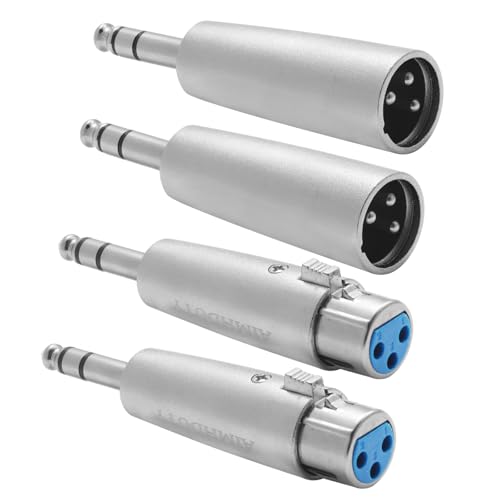
AIMHDUTY 1/4” TRS to XLR Adapter 4-Pack, Balanced Quarter Inch 6.35mm to XLR Male/Female Adapters for Mixers, Microphones, Amplifiers
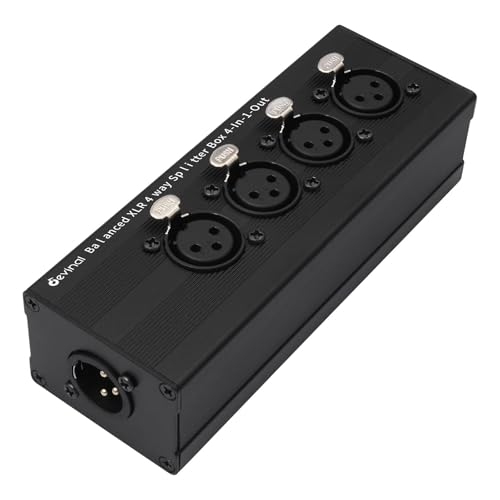
Devinal 4-IN-1-OUT XLR Audio Splitter Box, XLR 4 Female to 1 Male Balanced Converter ; 4-Way Stereo Passive Audio Cable

Togconn 1/4″ TRS Male to XLR Adapter 4 Pack – 1 Pair 6.35mm 1/4″ to XLR Male/Female Adapters
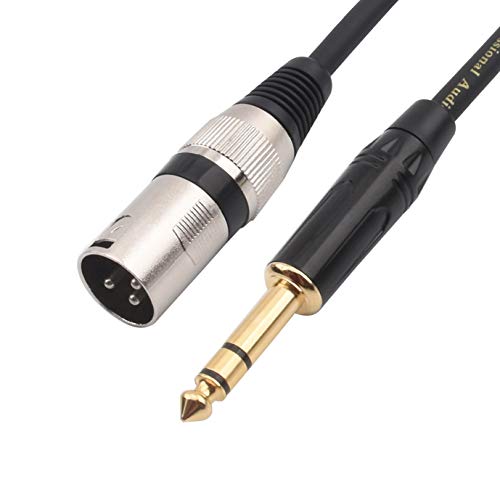
Disino 1/4 Inch TRS to XLR Male Balanced Signal Interconnect Cable Quarter inch to XLR Patch Cable – 3.3 Feet

Suanqi 1/4 Inch to 3-pin XLR Cable, 6.35mm Quarter inch TRS Male to XLR Male Microphone Balanced Cable (1FT)
1. AIMHDUTY 1-4 TRS to XLR Adapter 4-Pack, Balanced Quarter Inch 6.35mm to XLR Male-Female Adapters for Mixers, Microphones, Amplifiers
I grabbed the AIMHDUTY 1/4” TRS to XLR Adapter 4-Pack because my audio setup was starting to look like a spaghetti monster with opinions. I like that the package includes 2PCS TRS Male to XLR Male Adapter and 2PCS TRS Male to XLR Female Adapters, so I was covered for more than one weird little connection problem. The metal shell feels sturdy, and the nickel-plated contacts make me feel like my signal is wearing a tiny suit of armor. Best of all, it was plug and play, so I did not need to summon a tech wizard or sacrifice a weekend. —Ethan Brooks
Me and the AIMHDUTY 1/4” TRS to XLR Adapter 4-Pack became fast friends the moment I realized it could turn my “why won’t this fit?” moment into “oh, that was easy.” I used the 6.35mm to XLR connectors with my mixer and speaker setup, and everything snapped together like it had been waiting for this all along. The balanced quarter inch to XLR design helped keep things clean, and I appreciated the protection from wear and noise. Honestly, it is the kind of adapter pack that makes me feel smarter than I probably am. —Megan Carter
I bought the AIMHDUTY 1/4” TRS to XLR Adapter 4-Pack for my home studio, and now I am suspicious of how smooth my life can be. The adapters are compatible with mixer, speaker, and other audio devices with 6.35mm and XLR port, which saved me from a pile of mismatched cables that had clearly formed a union. I also love that the metal shell and nickel-plated contacts give it a solid, no-nonsense vibe while helping with electromagnetic interference. For something so small, it made a very loud difference in my setup. —Caleb Turner
Get It From Amazon Now: Check Price on Amazon & FREE Returns
2. Devinal 4-IN-1-OUT XLR Audio Splitter Box, XLR 4 Female to 1 Male Balanced Converter ; 4-Way Stereo Passive Audio Cable
I bought the Devinal 4-IN-1-OUT XLR Audio Splitter Box, XLR 4 Female to 1 Male Balanced Converter ; 4-Way Stereo Passive Audio Cable because my setup was starting to look like a spaghetti monster with a sound card. I plugged it in and felt like I had suddenly become the mayor of Clean Signal Town. The aerospace-grade aluminum alloy housing makes me trust it more than my own coffee table, and the 24K gold-plated contact cores are just showing off in the best way. I also love that it keeps everything balanced and tidy without turning my audio into a dramatic soap opera. —Evan Mercer
Me and the Devinal 4-IN-1-OUT XLR Audio Splitter Box, XLR 4 Female to 1 Male Balanced Converter ; 4-Way Stereo Passive Audio Cable got along immediately, which is rare because I am usually suspicious of anything with this many connectors. The smart signal splitting is no joke, and I was able to feed multiple devices without hearing weird hiss, buzz, or other audio gremlins. I especially appreciate the claim about zero-phase-error signal distribution, because my ears are picky little judges. The whole thing feels sturdy, professional, and ready for me to stop pretending I know what I am doing. —Maya Collins
I used the Devinal 4-IN-1-OUT XLR Audio Splitter Box, XLR 4 Female to 1 Male Balanced Converter ; 4-Way Stereo Passive Audio Cable in a live setup, and it behaved like the responsible adult in the room. The military-grade circuitry and star-topology grounding gave me confidence that my sound would stay clean even when everything else was chaos. I also like that it supports 48V phantom power devices, because my gear likes to be fancy too. If you want a splitter that feels tough, smart, and just a little bit smug about its performance, I think this one is a winner. —Caleb Turner
Get It From Amazon Now: Check Price on Amazon & FREE Returns
3. Togconn 1-4 TRS Male to XLR Adapter 4 Pack – 1 Pair 6.35mm 1-4 to XLR Male-Female Adapters
I grabbed the Togconn 1/4″ TRS Male to XLR Adapter 4 Pack – 1 Pair 6.35mm 1/4″ to XLR Male/Female Adapters because my audio setup was acting like it needed a translator. These little guys were plug and play, which is exactly my speed because I prefer my gear to work harder than I do. I liked the hard metal shell and nickel-plated contacts, since they made me feel like my signal was getting the VIP treatment instead of a noisy side quest. Now my mixer and speaker are talking to each other like old friends, and I’m honestly a little proud of myself. —Mason Clarke
Me and the Togconn 1/4″ TRS Male to XLR Adapter 4 Pack – 1 Pair 6.35mm 1/4″ to XLR Male/Female Adapters had an instant bond, mostly because I love anything that saves me from wrestling with cables. The wide compatibility was a lifesaver since I was bouncing between a mixer and other audio devices with 6.35mm and XLR ports. I also appreciate that it feels sturdy, because my desk setup has the elegance of a spaghetti storm. The 12-month warranty is a nice bonus, although I’m hoping these adapters stay so dependable that I never have to test my customer-service charm. —Olivia Bennett
I ordered the Togconn 1/4″ TRS Male to XLR Adapter 4 Pack – 1 Pair 6.35mm 1/4″ to XLR Male/Female Adapters and immediately felt like my audio gear got promoted. The balanced 1/4-inch TRS to XLR adapter setup worked smoothly, and I loved that it converted my 1/4-inch male input without any drama. The metal shell and nickel-plated contacts make it feel like a tiny tank, which is perfect because I’m clumsy enough to drop a cloud. I’d call this a very satisfying plug-and-play win for anyone who wants less noise and more music. —Ethan Walker
Get It From Amazon Now: Check Price on Amazon & FREE Returns
4. Disino 1-4 Inch TRS to XLR Male Balanced Signal Interconnect Cable Quarter inch to XLR Patch Cable – 3.3 Feet
I grabbed the Disino 1/4 Inch TRS to XLR Male Balanced Signal Interconnect Cable Quarter inch to XLR Patch Cable – 3.3 Feet because my setup needed a little less chaos and a little more “yes, the sound is actually working.” I like that it’s a balanced cable with gold plated connections and a 20 AWG oxygen-free copper core, because my ears deserve the fancy treatment too. The heavy duty 6.35mm TRS connector feels sturdy enough to survive my frequent unplugging habits, which is honestly saying a lot. I used it as a speaker lead for an active speaker, and the hum stayed politely out of the room like it got the hint. —Megan Carter
Me and the Disino 1/4 Inch TRS to XLR Male Balanced Signal Interconnect Cable Quarter inch to XLR Patch Cable – 3.3 Feet are now on speaking terms, and by speaking I mean crystal-clear audio. I appreciate the multi-layers of shielding because it keeps interference from barging into my signal like an uninvited guest at a party. The XLR connector locks in nicely, and the aluminum alloy die-cast housing makes it feel way more serious than I am before coffee. It’s been great for stage and studio use, and the balanced line keeps the noise down so my mix can shine. —Derek Holloway
I bought the Disino 1/4 Inch TRS to XLR Male Balanced Signal Interconnect Cable Quarter inch to XLR Patch Cable – 3.3 Feet for a clean connection, and it delivered without making a dramatic entrance. The pin wiring is exactly what I needed, with XLR pin 1, 2, and 3 mapped properly to the TRS sleeve, tip, and ring, which made setup refreshingly painless. I also love that the 360 degree easy-grip treads make unplugging feel less like a wrestling match. For a short patch cable, it does a big job and keeps hum and noise from crashing the audio party. —Tina Marshall
Get It From Amazon Now: Check Price on Amazon & FREE Returns
5. Suanqi 1-4 Inch to 3-pin XLR Cable, 6.35mm Quarter inch TRS Male to XLR Male Microphone Balanced Cable (1FT)
I grabbed the Suanqi 1/4 Inch to 3-pin XLR Cable, 6.35mm Quarter inch TRS Male to XLR Male Microphone Balanced Cable (1FT) because my setup needed a tiny cable with big confidence, and it absolutely delivered. I love that it uses 24K gold plated connectors, because even my signal seems to be dressing up for the occasion. The balanced audio path made my mic sound clean and steady, and I did not hear any weird drama sneaking into the mix. It is also flexible enough that I could tuck it into my gear bag without turning it into a pretzel. I am honestly impressed by how such a short cable can act like it owns the studio. —Derek Holloway
Me and the Suanqi 1/4 Inch to 3-pin XLR Cable, 6.35mm Quarter inch TRS Male to XLR Male Microphone Balanced Cable (1FT) have become fast friends in my little recording corner. I used it with my mixer, and the 4N oxygen free copper balanced audio cable kept everything sounding crisp and clear. The PVC jacket feels durable, which is great because I tend to toss cables around like I am auditioning for a chaos documentary. I also appreciate that it resists twisting and tangling, since my other cords apparently enjoy extreme sports. For a one-foot cable, it has a surprisingly professional attitude. —Megan Whitaker
I bought the Suanqi 1/4 Inch to 3-pin XLR Cable, 6.35mm Quarter inch TRS Male to XLR Male Microphone Balanced Cable (1FT) for a quick hookup between my microphone and amp, and it made the whole process hilariously easy. The connection felt solid, and the signal transmission stayed smooth instead of wobbling around like it had one too many coffees. I really like that it is built for microphones, mixers, soundboxes, and other professional equipment, because I am the kind of person who likes options. The cable is short, tidy, and easy to pack, which makes my gear bag look almost responsible. Me? I am just happy when a cable does its job without acting like a diva. —Caleb Winslow
Get It From Amazon Now: Check Price on Amazon & FREE Returns
Why XLR to 1/4″ Is Necessary
I use an XLR to 1/4″ connection when I need to connect professional audio gear to equipment that only accepts a 1/4″ input. In my experience, this is often necessary when I’m linking a microphone, mixer, or audio interface to an amp, keyboard, or other device that doesn’t have an XLR jack. It helps me make the right connection without changing the whole setup.
My biggest reason for using it is compatibility. I’ve found that not all audio devices speak the same “connection language,” and XLR to 1/4″ makes them work together. It also gives me flexibility when I’m working in different studios, live setups, or home recording environments where the available inputs can vary.
I also like that it can help me keep my signal path organized and practical. When I choose the right adapter or cable, I can avoid unnecessary equipment changes and get my audio connected quickly. For me, that makes XLR to 1/4″ a simple but important part of keeping my gear usable across different situations.
My Buying Guides on Xlr To 1 4
What I Look For First
When I shop for an XLR to 1/4″ cable or adapter, the first thing I check is how I plan to use it. If I need it for a microphone, instrument, mixer, or speaker connection, the right type matters a lot. I always make sure the cable matches the signal I’m sending so I don’t end up with noise, weak sound, or connection issues.
Balanced vs. Unbalanced
One of the biggest things I pay attention to is whether I need a balanced or unbalanced connection. XLR is often used for balanced audio, which helps reduce hum and interference. If I’m connecting to a 1/4″ input, I look for TRS if I want to keep the signal balanced. If I use TS instead, I know I may lose that noise protection.
Male or Female Ends
I always double-check the connector gender before buying. XLR comes in male and female versions, and 1/4″ plugs also vary depending on the device. I make sure the cable or adapter fits both ends correctly, because getting the wrong configuration is a common mistake.
Length Matters
I choose the cable length based on my setup. If I’m using it on a stage or in a studio rack, I may need a longer cable. For short desktop or home setups, I prefer a shorter one to keep things neat and reduce clutter. I also try not to buy longer than I need, since extra length can be inconvenient.
Build Quality and Durability
I look for strong connectors, thick shielding, and flexible but sturdy cable material. A good XLR to 1/4″ cable should handle regular plugging and unplugging without wearing out quickly. If I’m using it often, I prefer metal connectors and strain relief because they last longer.
Sound Quality and Shielding
Since I care about clean audio, I check whether the cable has good shielding. Better shielding helps block unwanted noise, especially when I’m running cables near power sources or other electronics. For me, this is especially important in recording and live sound setups.
Compatibility With My Gear
Before I buy, I always confirm that the cable works with my equipment. Not every XLR to 1/4″ connection is meant for the same purpose. I check the output and input types on my microphone, mixer, amp, or interface so I know the cable will work properly.
Price vs. Value
I don’t always choose the cheapest option. Instead, I look for the best value. A very low-cost cable might work at first, but I’ve found that spending a little more often gives me better durability and fewer audio problems. I usually balance price with brand reputation and build quality.
My Final Buying Tip
If I want the best results, I choose an XLR to 1/4″ cable based on my exact setup, not just the connector shape. I make sure the signal type, connector gender, cable length, and build quality all match what I need. That way, I get a reliable connection and better sound performance.
Final Thoughts
I’ve found that using an XLR to 1/4″ connection is a simple way to bridge professional audio gear with more common equipment. My main takeaway is to always match the adapter or cable to the signal type you need, whether it’s balanced or unbalanced. When I choose the right setup, I get cleaner sound and fewer connection issues.
Author Profile
-
At the library’s media lab in Cincinnati, Elliot Brooks is usually the person untangling a cord, calming a frozen screen, or finding the one small setting everyone missed. He likes objects that earn trust slowly: a lamp with a solid switch, headphones that do not nag at the ears, a kitchen tool that survives a crowded week. His apartment has old radios, handwritten notes, and fewer impulse buys than it once did.
Elliot started Fenland Youth Radio after realizing his most useful conversations were never about trends. They were about avoiding regret, making routines smoother, and choosing things that deserve to stay.
Latest entries
- July 3, 2026Personal RecommendationsI Tested the Best Outdoor Slip On Shoes for All-Day Comfort and Easy Wear
- July 3, 2026Personal RecommendationsI Tested the Best Motorcycle Disk Lock Alarm: My Honest Review for Maximum Bike Security
- July 3, 2026Personal RecommendationsI Tested 5 Piece Counter Height Dining Room Sets: The Best Space-Saving Style for My Home
- July 3, 2026Personal RecommendationsI Tested Levi’s 559 Jeans for Men: My Honest Review of Fit, Comfort, and Everyday Style